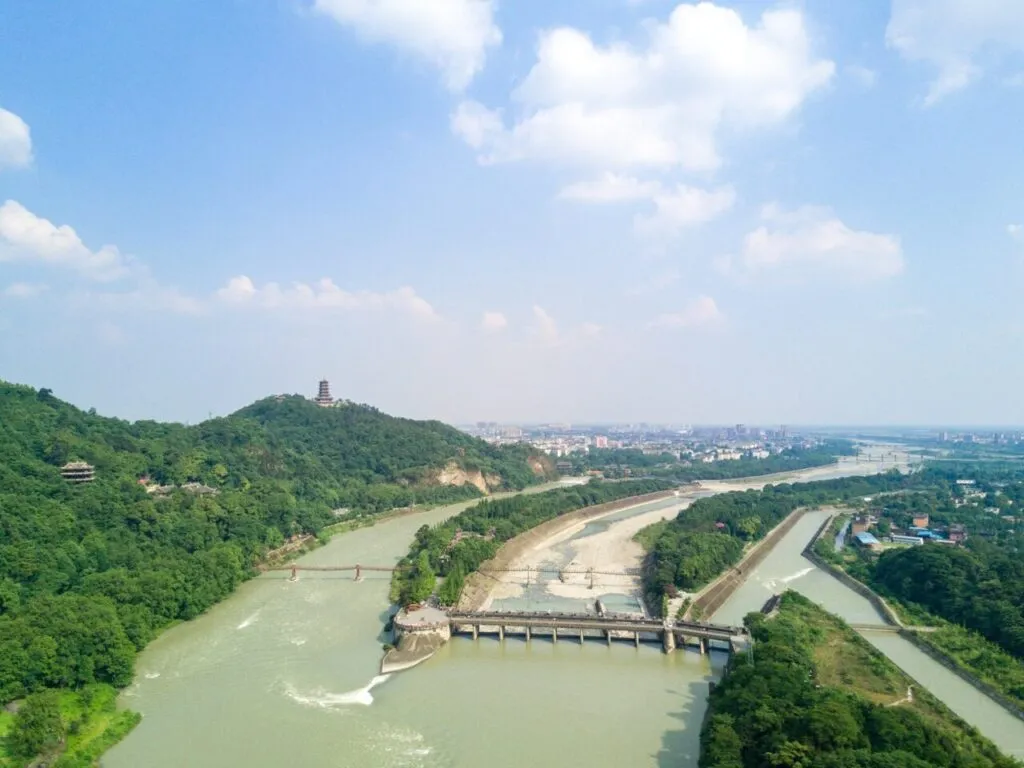
Dujiangyan is an ancient irrigation system on the Minjiang River that still serves the surrounding region. For a day trip from Chengdu, plan time to explore the site as well as the journey to and from the entrance.
What is the Dujiangyan irrigation system?
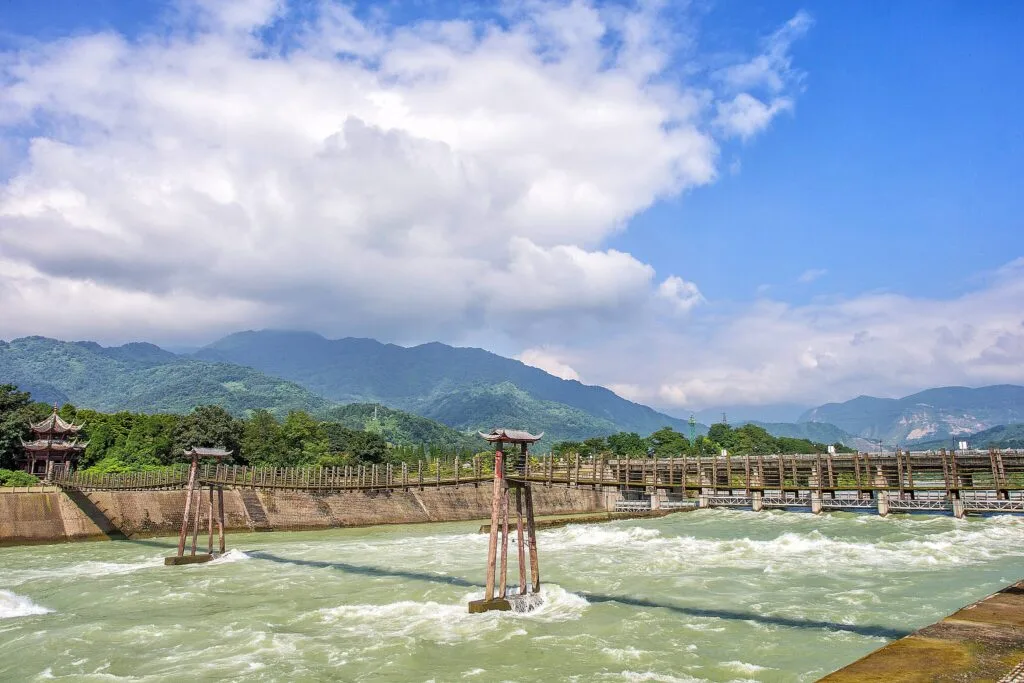
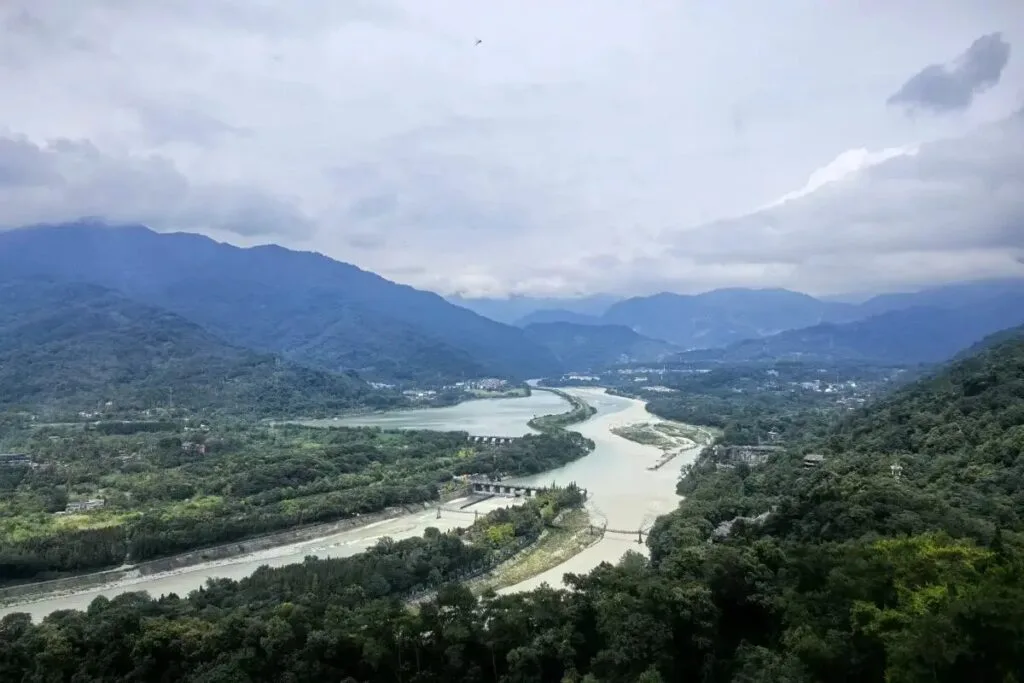
UNESCO dates the system to the third century BCE and lists it as a World Heritage Site together with Mount Qingcheng. It was built to manage the river’s water, and its role continues today.
Three names are worth knowing before you visit:
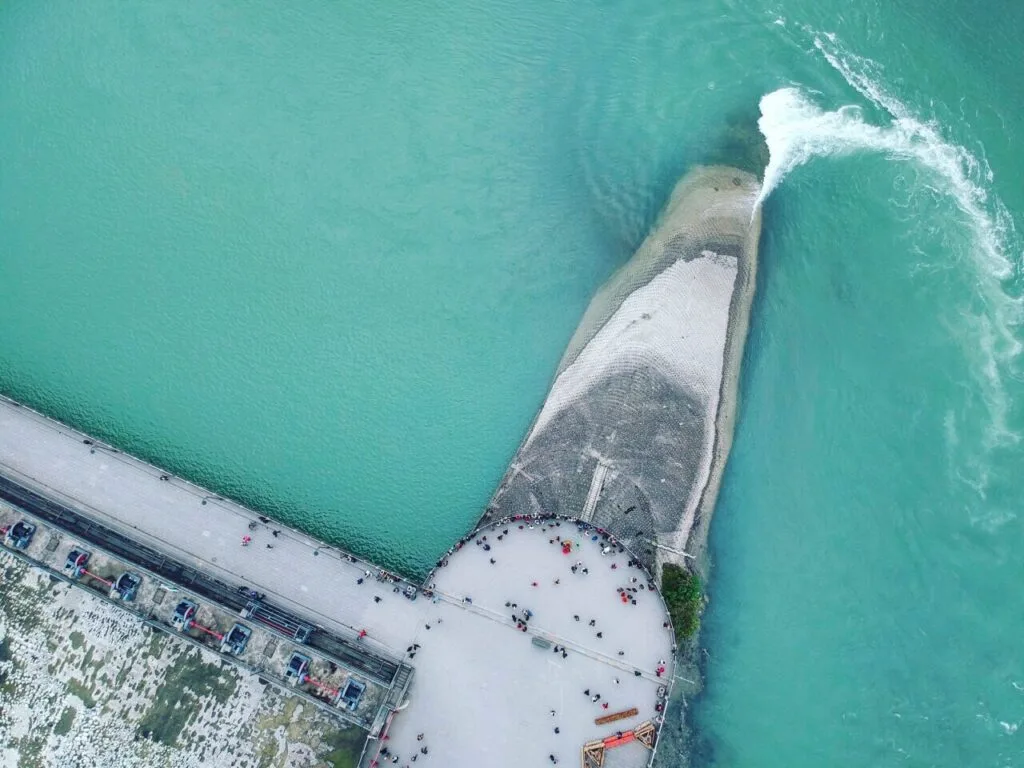
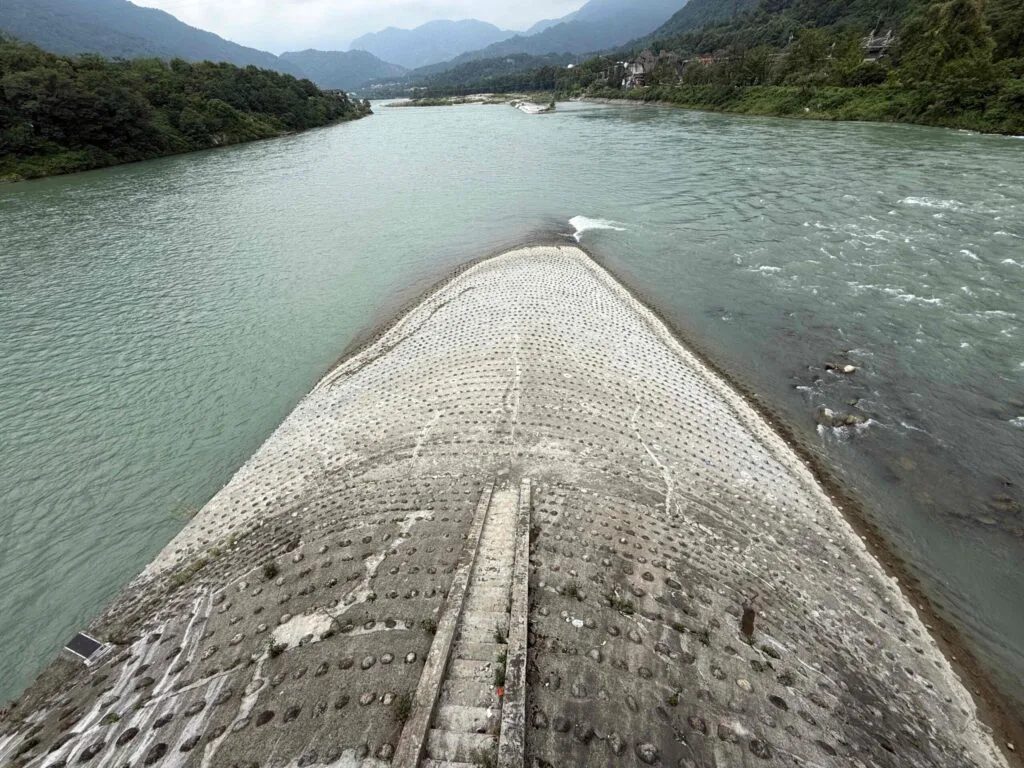
- Yuzui Bypass Dike (鱼嘴).
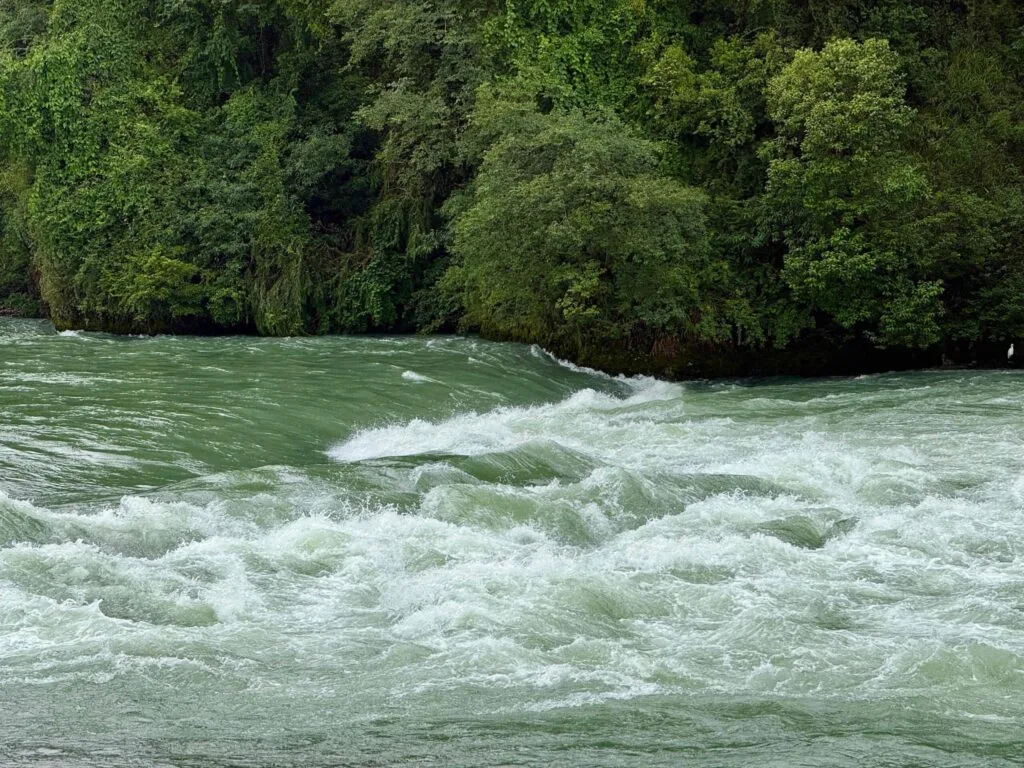
- Feishayan Floodgate (飞沙堰).
- Baopingkou Diversion Passage (宝瓶口).
Use these names with the site map and information boards to understand how the different parts work together.
Planning the journey from Chengdu
A straightforward starting plan: Chengdu Metro Line 2 → Xipu 犀浦 → a train to Liduigongyuan / Lidui Park 离堆公园 → the Lidui Guyuan entrance 离堆古园 → visit the irrigation works → return from Lidui Park to Xipu.
- Choose the trains first. On China Railway 12306, search Xipu → Liduigongyuan for your date, then the reverse journey. Use the Chinese names above to distinguish stations. Dujiangyan 都江堰 is a different station and needs a separate transfer to the sight.
- Reach Xipu from your hotel. Take Chengdu Metro Line 2 towards Xipu, then follow railway signs for your booked train. The metro ride and intercity train are separate journeys: allow time for the transfer and railway identity checks.
- From Lidui Park station, head to the entrance. Save 都江堰景区离堆古园大门 in your map. The tourism platform describes the site as walkable from this station. Follow the mapped walk to the gate, or take a taxi using that exact entrance name if the walk doesn’t suit you. The railway station and the admission gate are separate places.
- Return to Lidui Park station for your booked train to Xipu, then take the metro back towards your hotel. Include the walk back and station checks when choosing your departure; the sightseeing finish time isn’t the train departure time.
The rail connection is documented in official transport reporting, and the tourism platform’s older rail guide distinguishes the two arrival stations. Use 12306 for your date’s actual departures, fares and seats; the older guide’s timetable and prices aren’t used here. This guide doesn’t quote a measured station-to-gate walking time.
Carry the original identity document used for the train booking. If the Lidui Park trains don’t suit your date, compare a train to Dujiangyan station plus a taxi to the same entrance, including that extra journey in both directions.
Tickets and entry
The official tourism platform’s ticket page lists a standard adult admission ticket at CNY 80. Sightseeing vehicles, the escalator and guide services cost extra. You can choose passport details when booking through the listed official WeChat channels, 青城山都江堰 or 悦游都江堰, or take your passport to the on-site ticket office. Passport holders use the manual entry channel.
For the walk below, admission is the starting point; you don’t need to buy a transport-and-guide package automatically. A guide may be useful if you want more explanation of how the works function. Compare the language and inclusions before paying.
The tourism page suggests about three hours for the visit. Leave the station transfers and a meal outside that allowance. Opening and last-entry notices for your date take priority over the guide’s planning outline.
What to do at the site
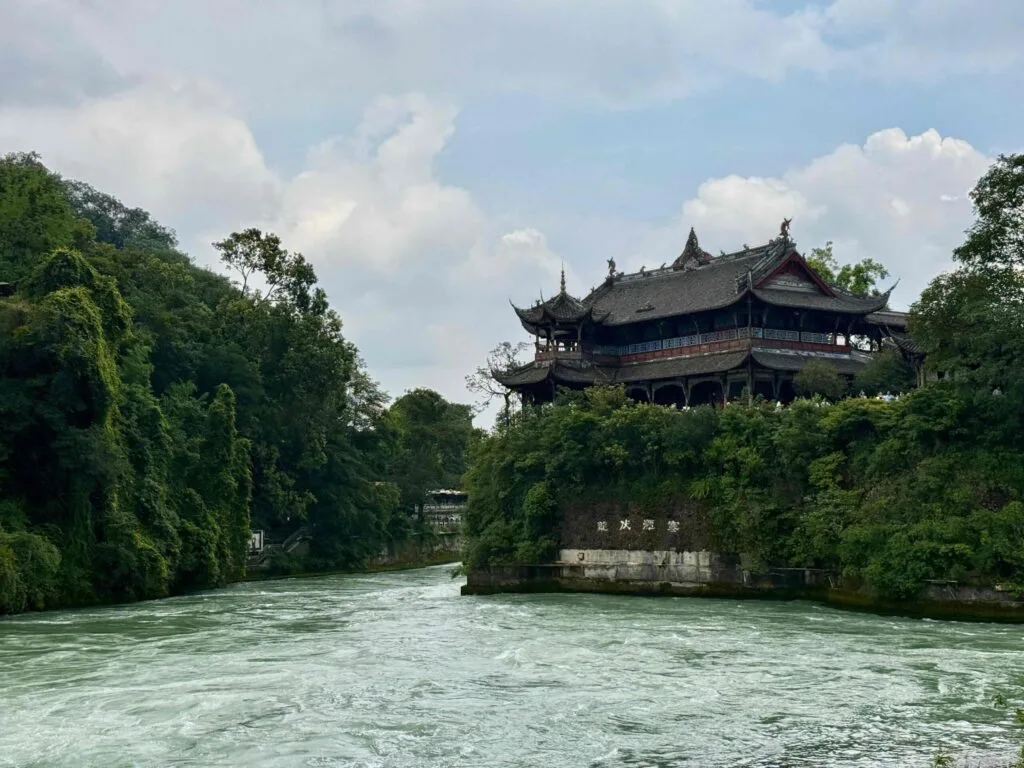
From Lidui Guyuan, follow the signed paths towards Fulong Temple 伏龙观 and Baopingkou 宝瓶口, then Feishayan 飞沙堰, along Jingang Dike 金刚堤 to Yuzui 鱼嘴. Return towards the Lidui Guyuan entrance for Nanqiao or the station. This keeps the outing focused on the three main irrigation features without adding a hillside circuit.
This suggested out-and-back walk joins the features in the scenic-area plan. It follows the plan’s Feishayan → Jingang Dike → Yuzui sequence; it isn’t a separate official guided tour. Use the entrance map and open signed paths on the day, particularly if high water restricts riverside access.
Wear shoes suited to your route and check the weather. Follow signs around the water and any closed sections.
Nanqiao and an evening by the river
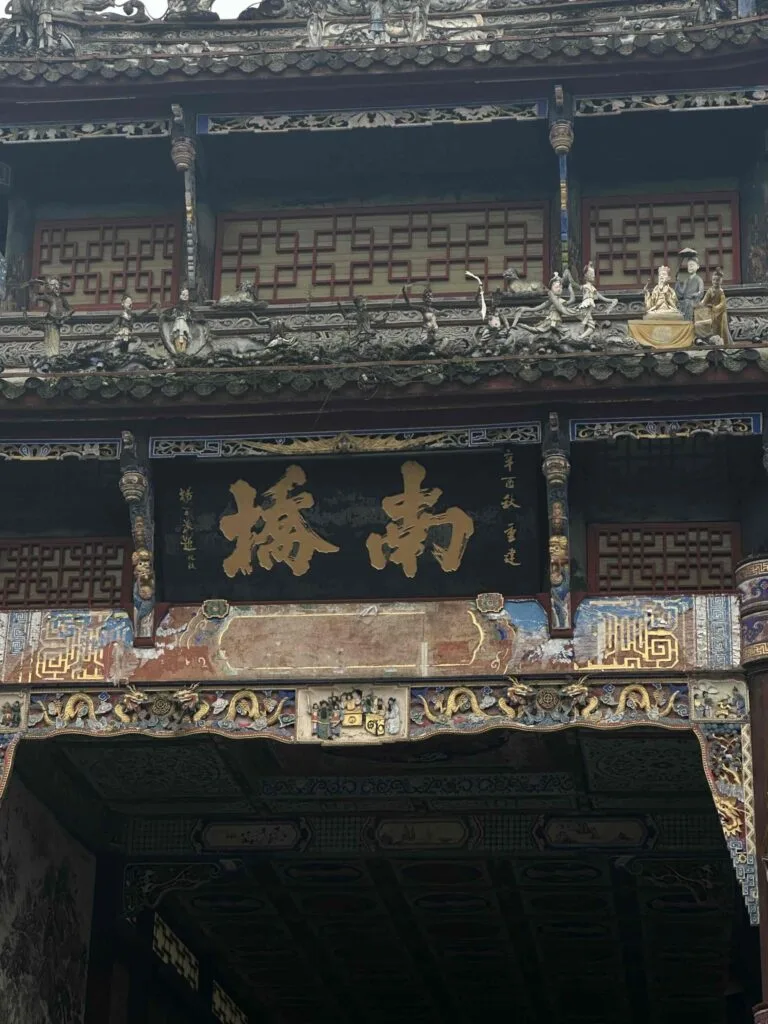
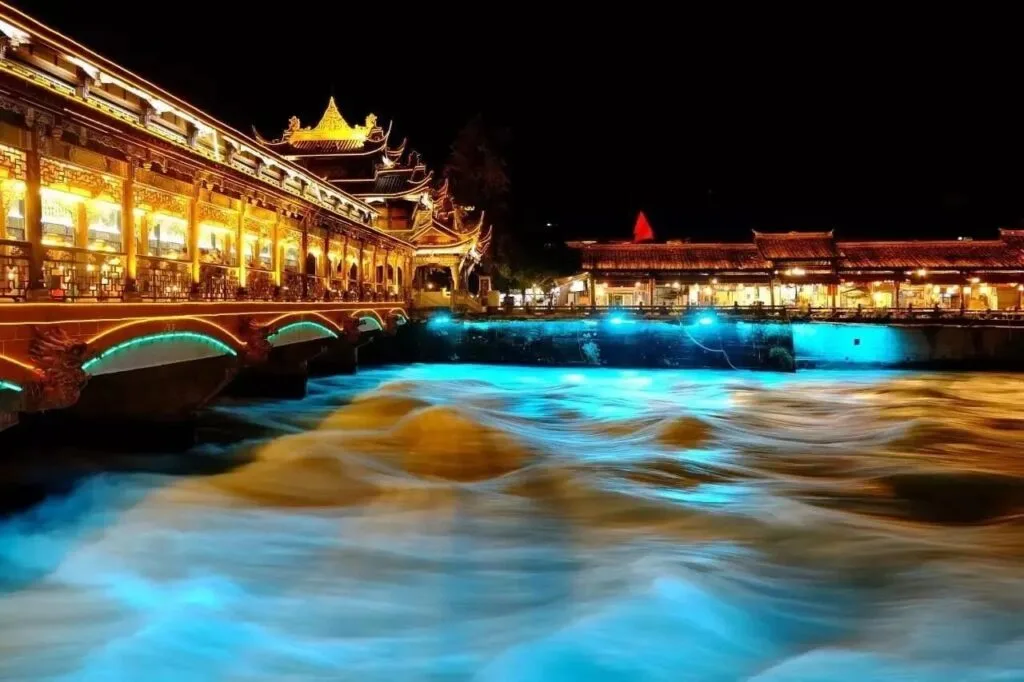
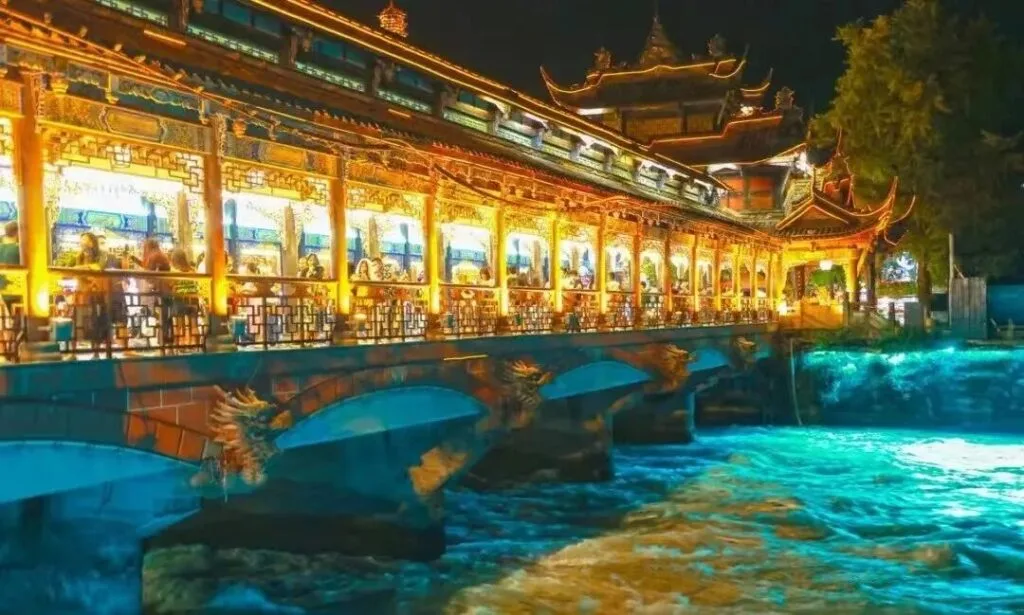
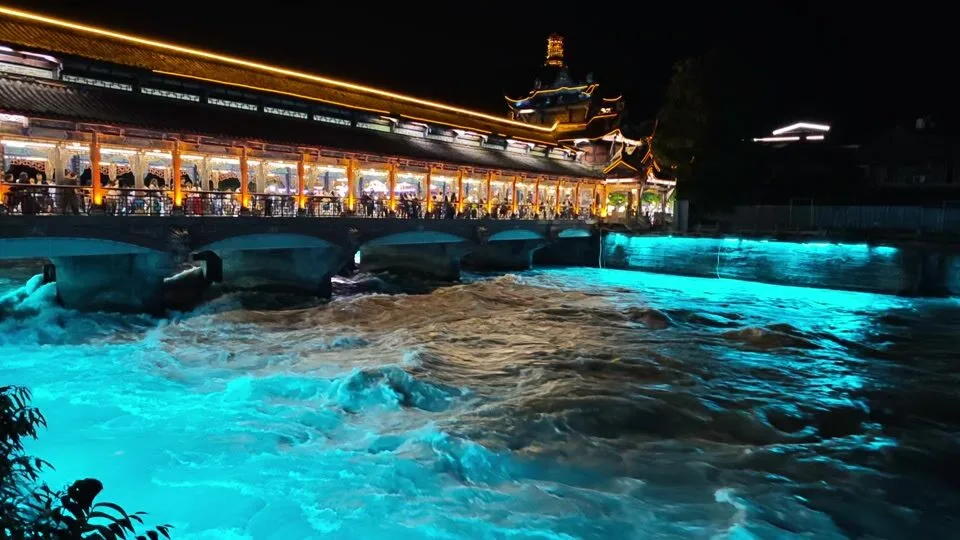
Nanqiao (南桥), or South Bridge, is another place to consider if you’re staying into the evening. Local reporting describes blue lighting reflected on the river around the bridge, often called “blue tears” in travel posts. The colour comes from the lighting, rather than a promise of a natural glowing-water event.
Choose between a daylight visit and return train or dinner and an evening bridge stop before booking the return. For the evening option, check Lidui Park → Xipu departures on 12306 first. If none leaves enough time, choose a daylight return or arrange a local overnight stay; don’t build the plan around finding a last-minute train after the lights.
You can also visit the irrigation system in daylight and keep the evening free. Treat the bridge as an optional addition rather than a reason to rush the main site.
Can you visit Mount Qingcheng on the same day?
They share a UNESCO listing, but visiting both means arranging separate transport, admission and walking routes. Work out those details before trying to fit them into one day.
For a first independent trip, I suggest choosing one as your main outing and saving the other for another day. You’ll have more time for the site, meals and any delays.
Before you leave
- Save the entrance, transport details and return plan offline.
- Bring the identity document required by your bookings.
- Carry a backup way to pay.
- Check the latest access notices and weather.
- Leave time before any evening plans back in Chengdu.
See Start here if you’re still sorting out the basics for your China trip.
If you’re deciding how this fits around Chengdu and Mount Qingcheng, send your dates, hotel area and draft days for an itinerary review.
Prefer to compare tickets or tours?
The official channels above sell the standard admission ticket. Trip.com is an alternative if you’d rather book in English or compare guided day trips from Chengdu. Check whether the price includes admission, transport and the sightseeing vehicle, and read the cancellation terms.
Compare Dujiangyan options on Trip.com (affiliate link)The provider handles your booking and sets the availability and terms.
Sources and updates
Sources checked on 29 Oct 2026.
- UNESCO: Mount Qingcheng and the Dujiangyan Irrigation System
- China Railway 12306: English passenger FAQ
- Sichuan Daily platform / Cover News: Nanqiao evening photo report, February 2026 (Chinese)
- Dujiangyan tourism official platform: rail arrival and station-to-site access (older guide)
- Dujiangyan tourism official platform: tickets and passport entry
- Chongqing municipal government: Xipu and Lidui Park rail connection, October 2024
- GoChengdu: Metro Line 2 access to Xipu, March 2026
- Sichuan Forestry and Grassland Administration: scenic-area plan, pages 21 and 24, published February 2025
Check the latest official information for your travel date before making a booking.
Spotted a mistake? Let me know.