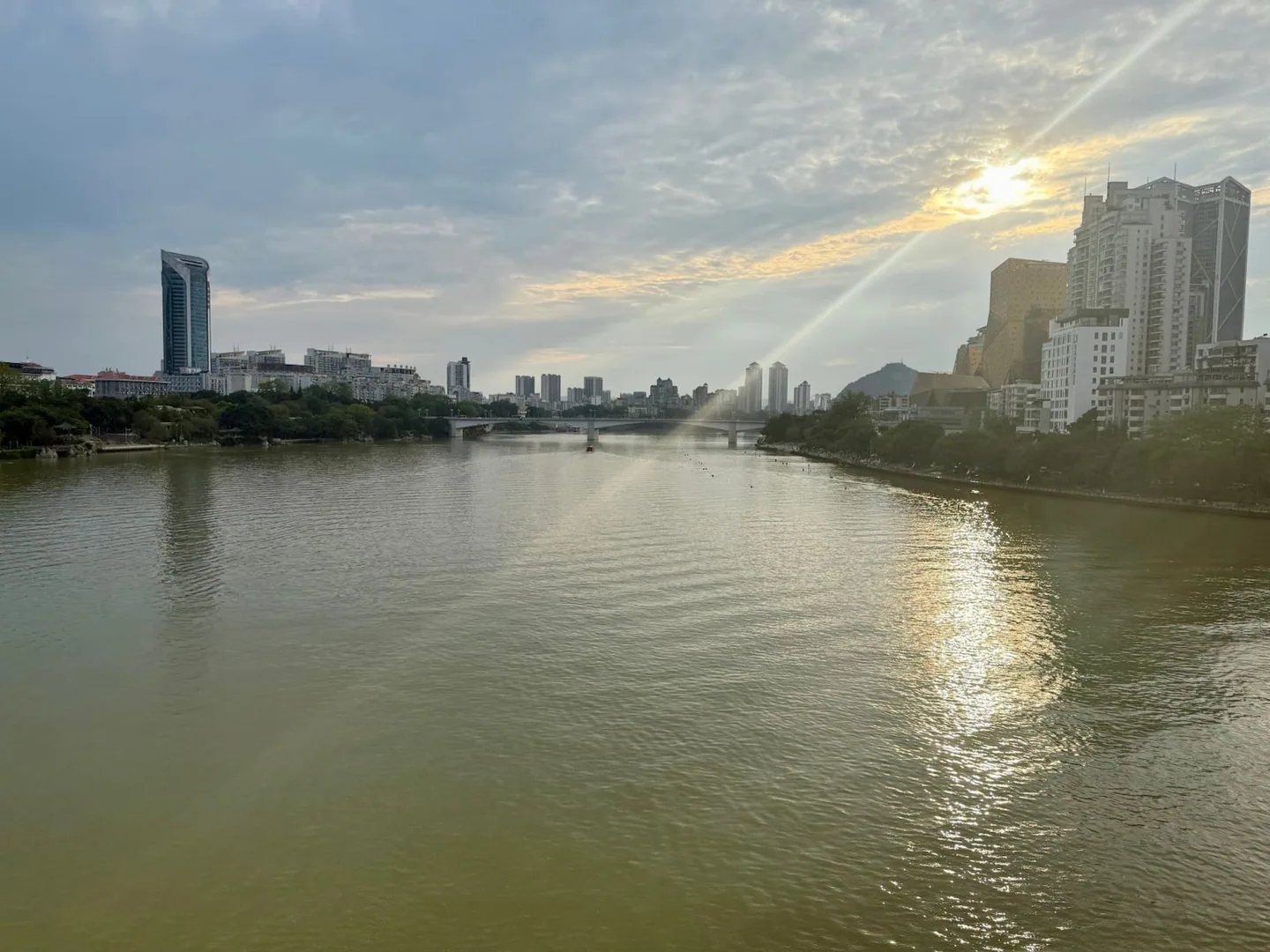
I spent ten days in Liuzhou in May 2026, in a flat near the Liu River with a food street right downstairs. What I remember most is everyday: bowls of rice noodles, men swimming in the river in the evening, rows of tiny electric cars along the kerb. And one night when the building shook, nineteen floors up, which is why my stay ended after those ten days.
A little background on Liuzhou
Liuzhou (柳州) is in Guangxi, in southern China, with hills around the city and the Liu River winding through it. Its history goes back to the Han dynasty. The writer Liu Zongyuan served as a local official here during the Tang dynasty, one of the connections explained in this official introduction to Liuzhou. Liuhou Park, which I visited during my stay, is named in his honour.
Today the city is best known for two things, luosifen and cars, and both ended up in my memories of it: one was sold downstairs, the other parked on almost every street.
A food street downstairs, the river nearby
I stayed in the central part of Liunan District (柳南区), close to the river, with a food street right below the building. I like being near water, and I’d come partly for the food, so it suited me well.
Luosifen has a big following among young people in China, and plenty of them travel to Liuzhou to eat it where it comes from. In the evenings, the food street was busy with visitors who had clearly come for the noodles.
By the river at the same time of day, I’d see a group of middle-aged men swimming. That scene stays with me as much as the bridges and lights: people actually in the water, right in the middle of the city.
The Liu River, by day and at night
From a bridge, I could look along the bank at the apartment blocks, a strip of trees by the water and the next bridge further away.
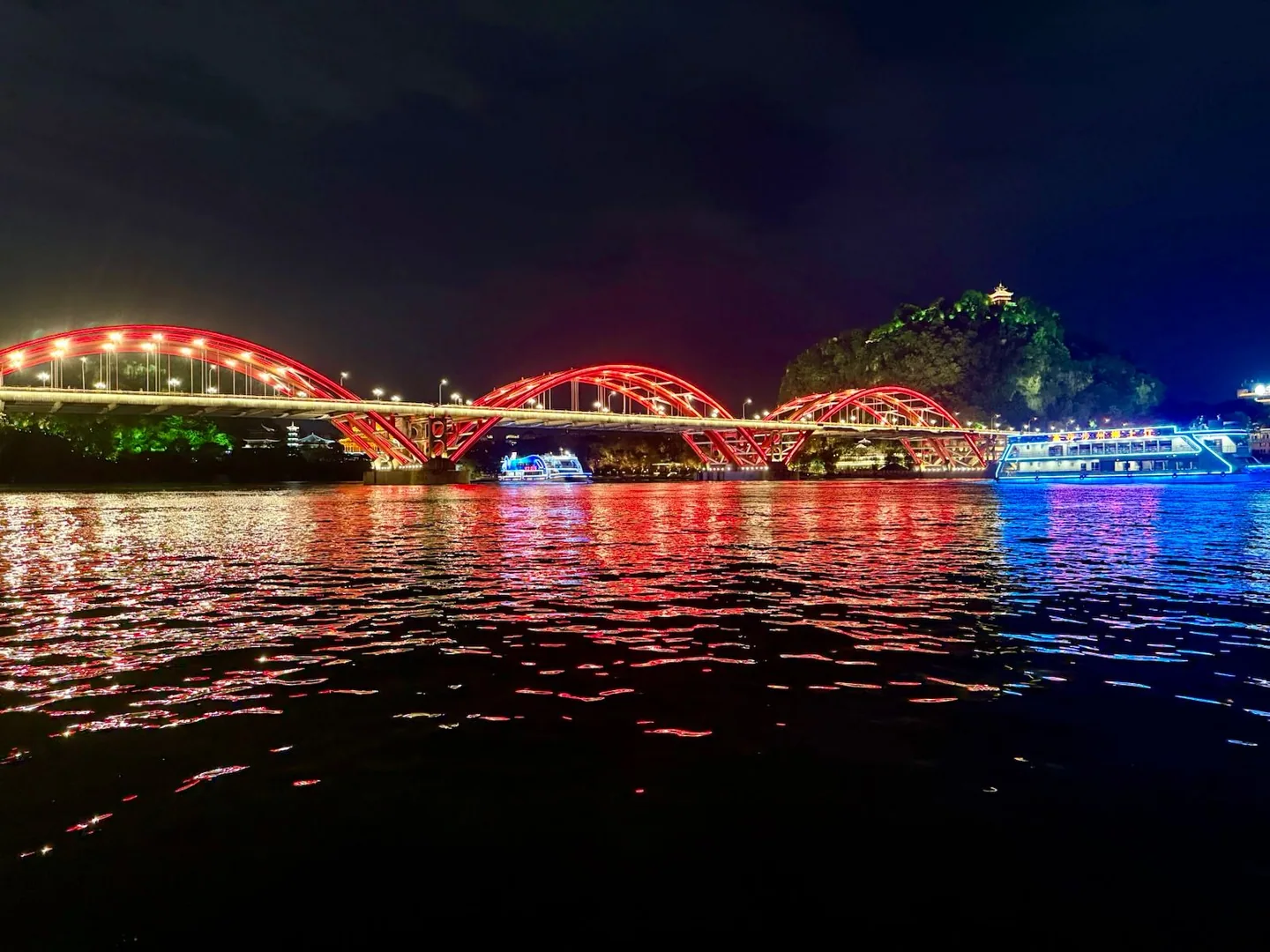
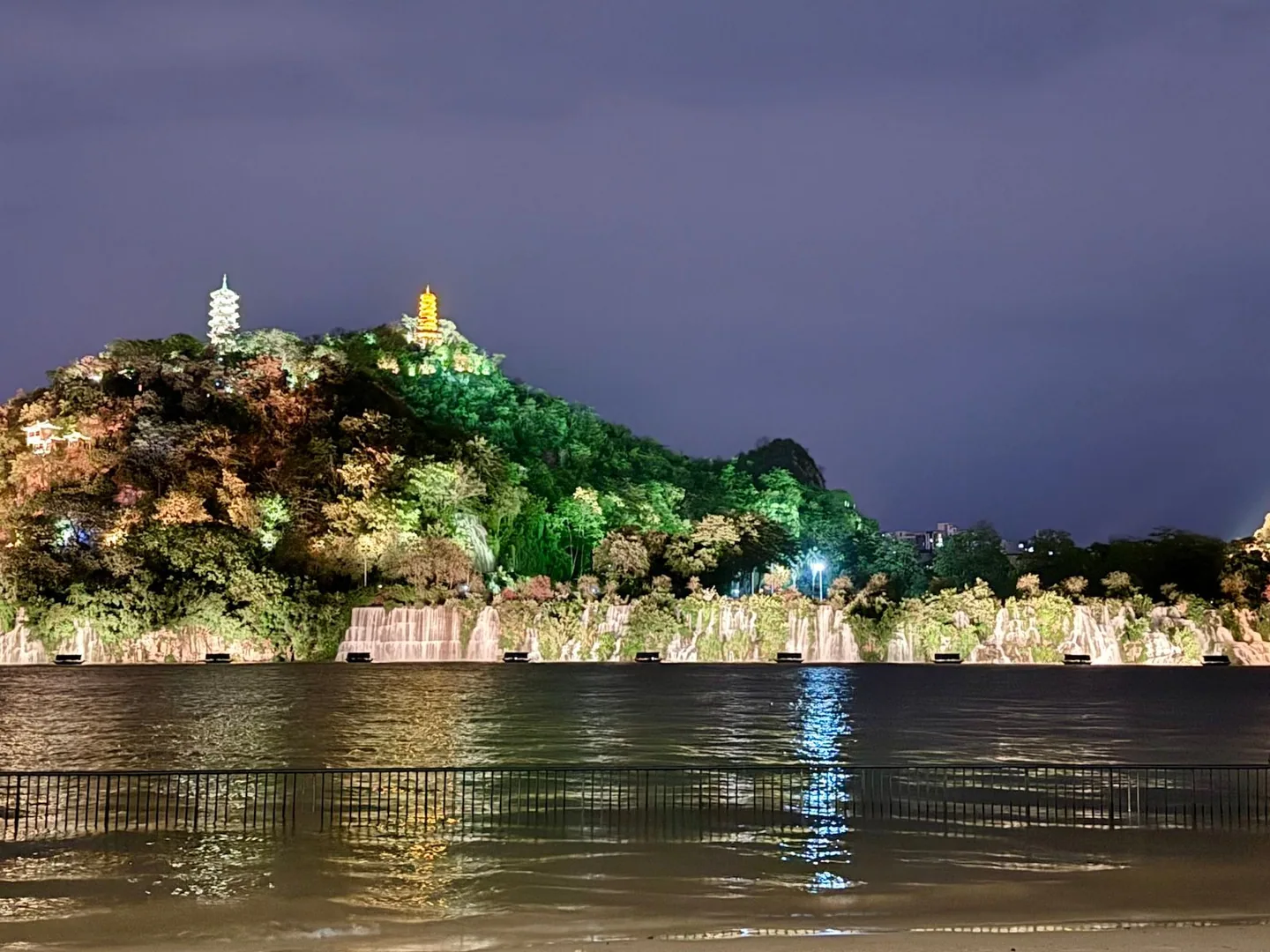
After dark, lights picked out the bridges and the hills across the river, from a red arch bridge to a lit hillside with water cascading down towards the river.
The Liu River musical fountain
The river also has a musical fountain. I filmed a little of it: jets of water rising above the river, with coloured lights and the city behind.
The waterfall at Panlongshan Park
On another day, at Panlongshan Park (蟠龙山公园), I stopped to film the man-made waterfall, which runs down the hillside in several tiers with trees all around it.
The little electric cars I kept seeing
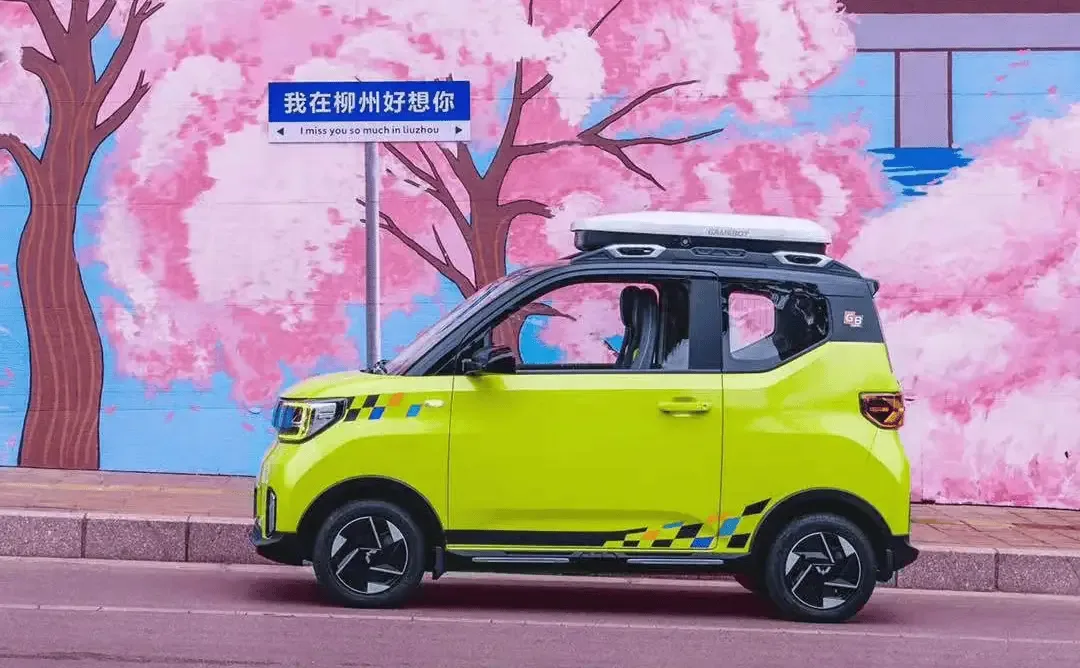
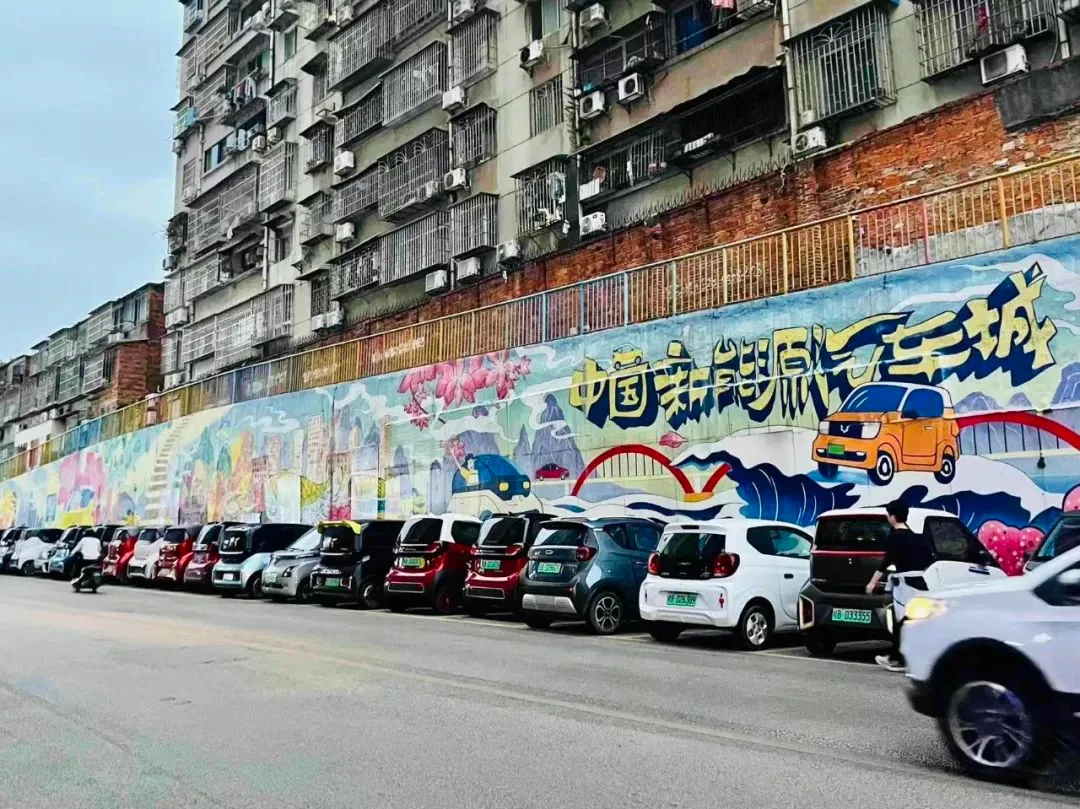
Liuzhou is home to SAIC-GM-Wuling, the maker of Wuling and Baojun vehicles, so it’s no surprise that its small electric cars are everywhere here. They’re good value and practical for short trips around town, which makes them popular with local drivers.
Wherever I walked, there seemed to be a row of them parked along the kerb. By the end of my stay, they were as much a part of my picture of Liuzhou as the river and the noodles.
People in China jokingly call them 剁椒鱼头 (duojiao yutou), after the dish of fish head with chopped chillies. The two reference images below show the kind of car I mean.
Several kinds of rice noodles
Before Liuzhou, the luosifen I’d eaten elsewhere always came with a strong smell, mostly from the fermented bamboo shoots (酸笋, suansun) in it. Here, I hardly noticed it, and when I did, it was much milder.
Even so, if fermented bamboo shoots are new to you, the milder version can take some getting used to, and a bowl every day over a long stay might be a lot. A day or two in Liuzhou works well too: try a bowl, walk by the river, then move on.
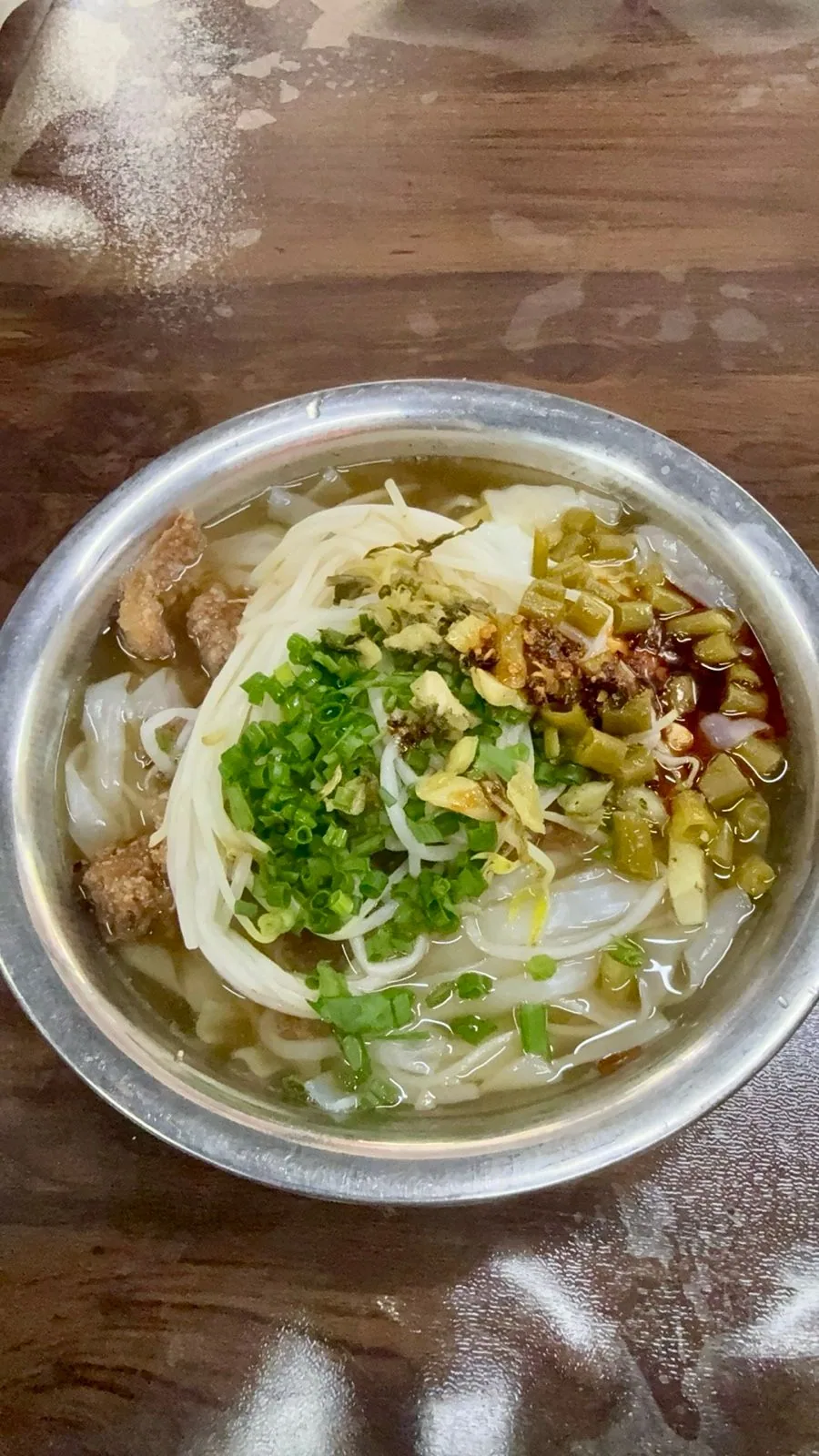
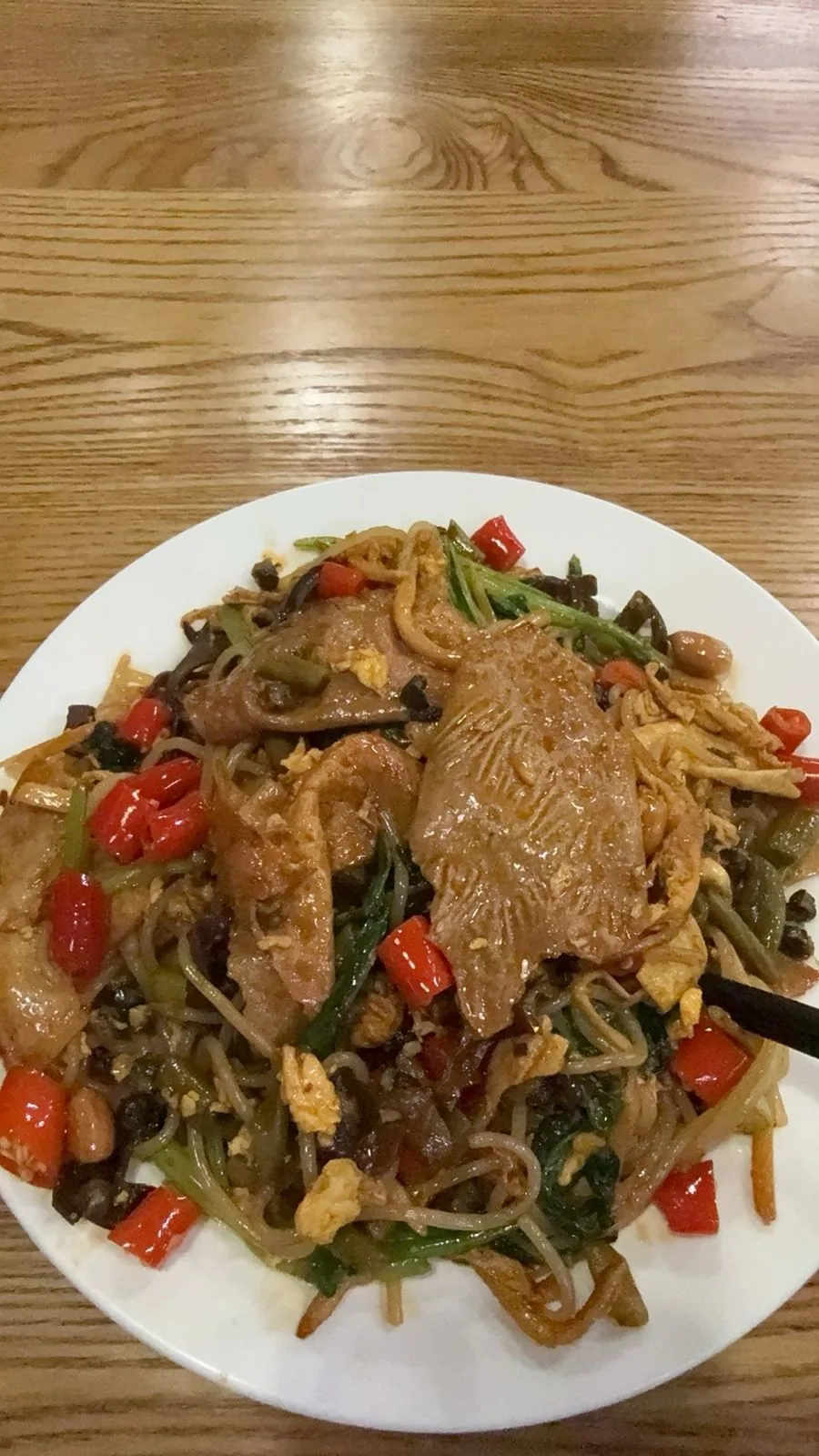
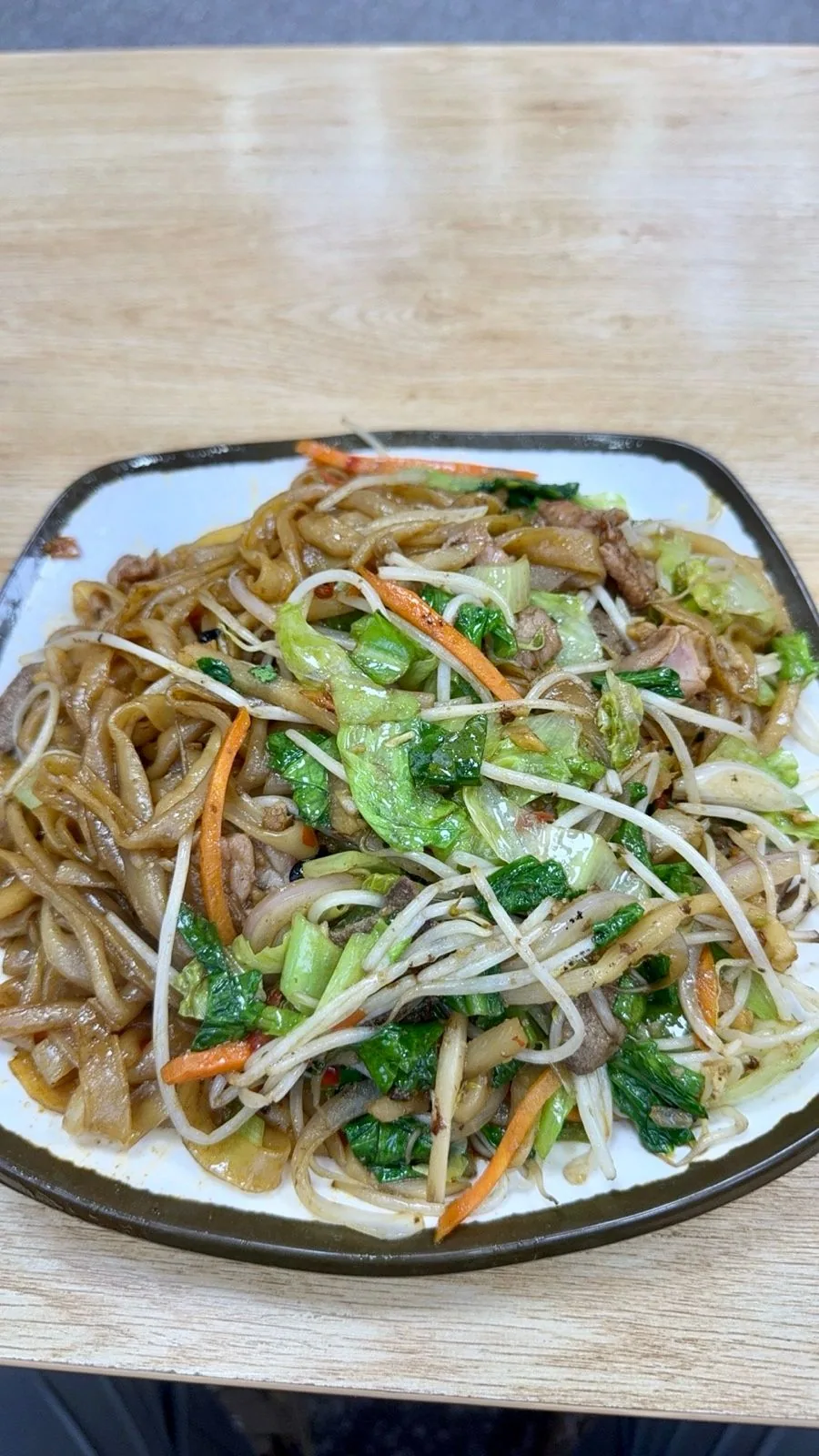
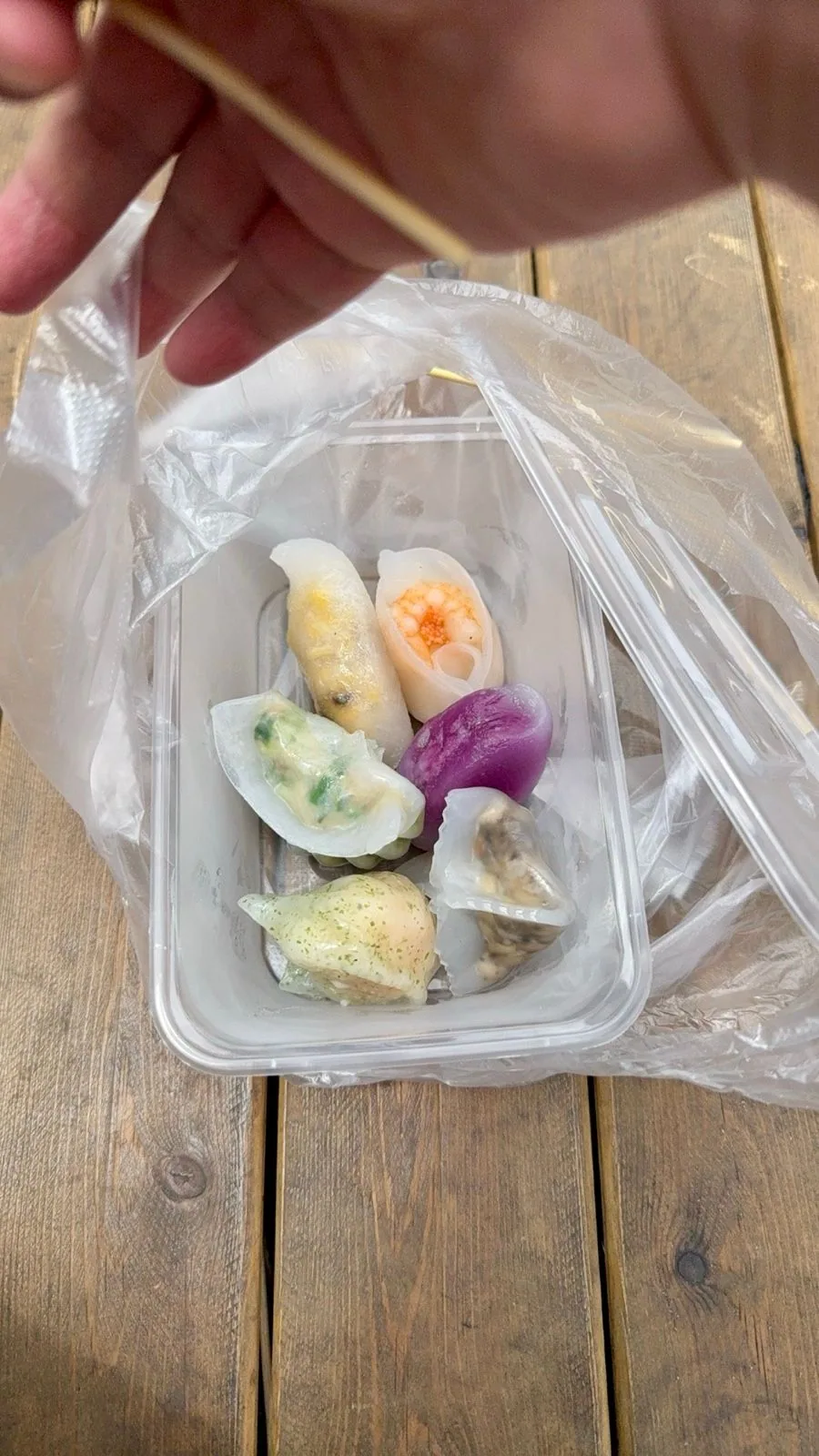
Luosifen wasn’t all I ate, though. I had Guilin rice noodles (桂林米粉) more than once (one bowl with meat cost CNY 10), along with stir-fried luosifen (炒螺蛳粉), stir-fried flat rice noodles (炒河粉) and a box of steamed dumplings. Not every bowl of rice noodles in Liuzhou is luosifen, so save the Chinese names if you want to order a particular one.
One night, I filmed a short walk through a snack street, past the lit stalls.
Something cool: huaihua fen and guilinggao
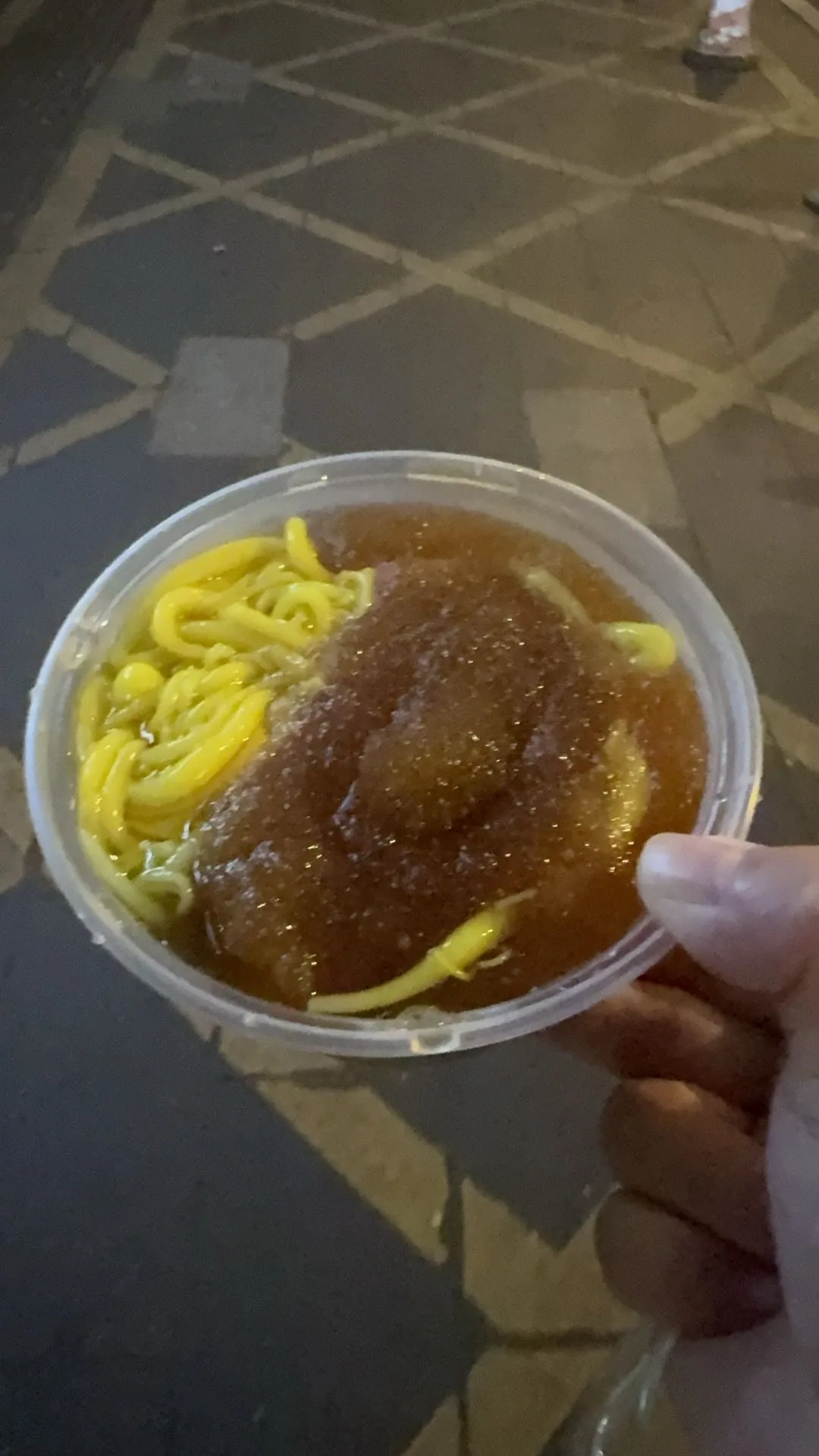
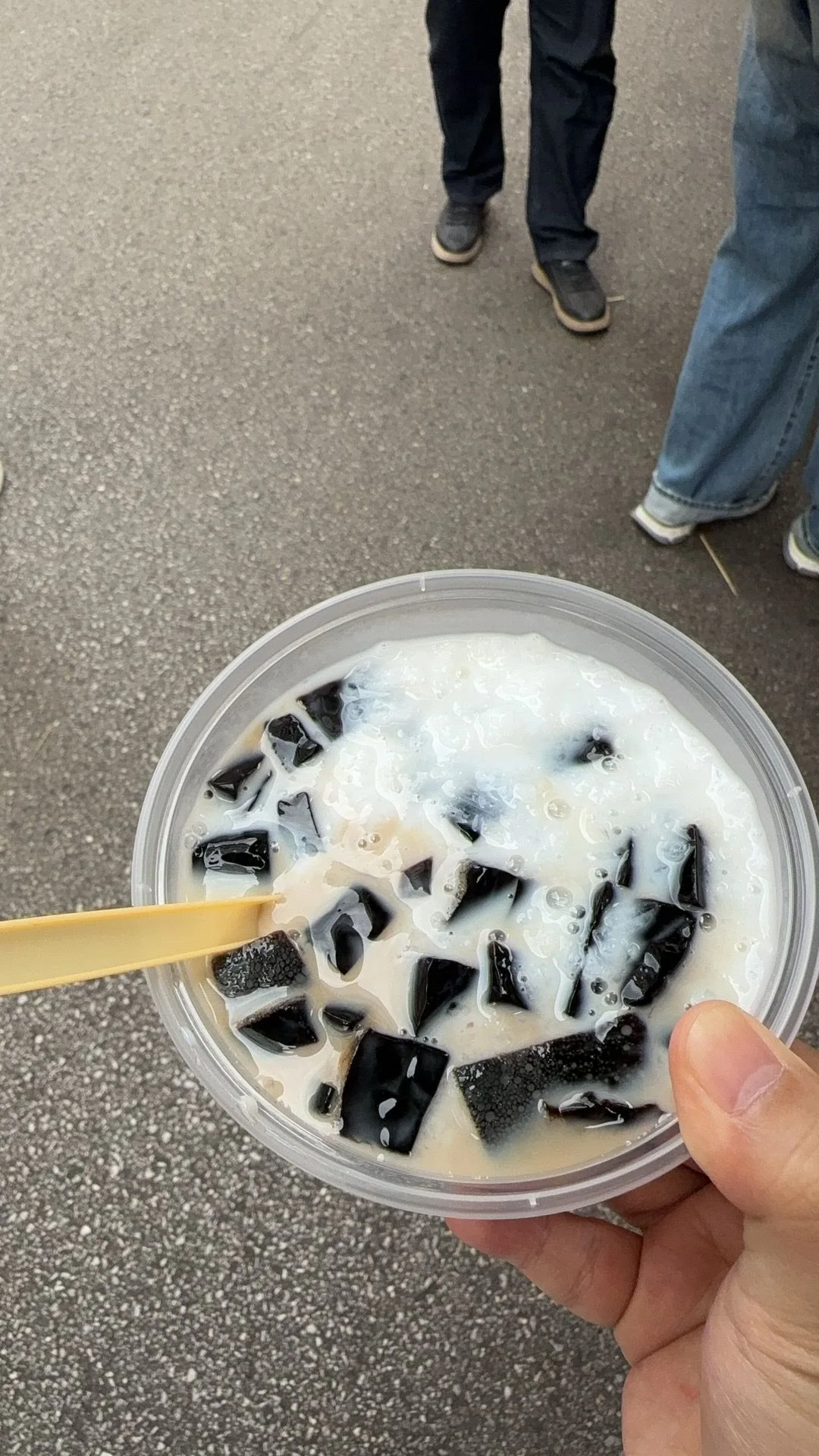
On warm days, two cool things were especially welcome. Huaihua fen (槐花粉) cost CNY 5 and was cool and refreshing. Guilinggao (龟苓膏), the dark jelly in the photograph below, was lightly sweet and just as refreshing. The prices here are what I paid in May 2026.
People in Liuhou Park
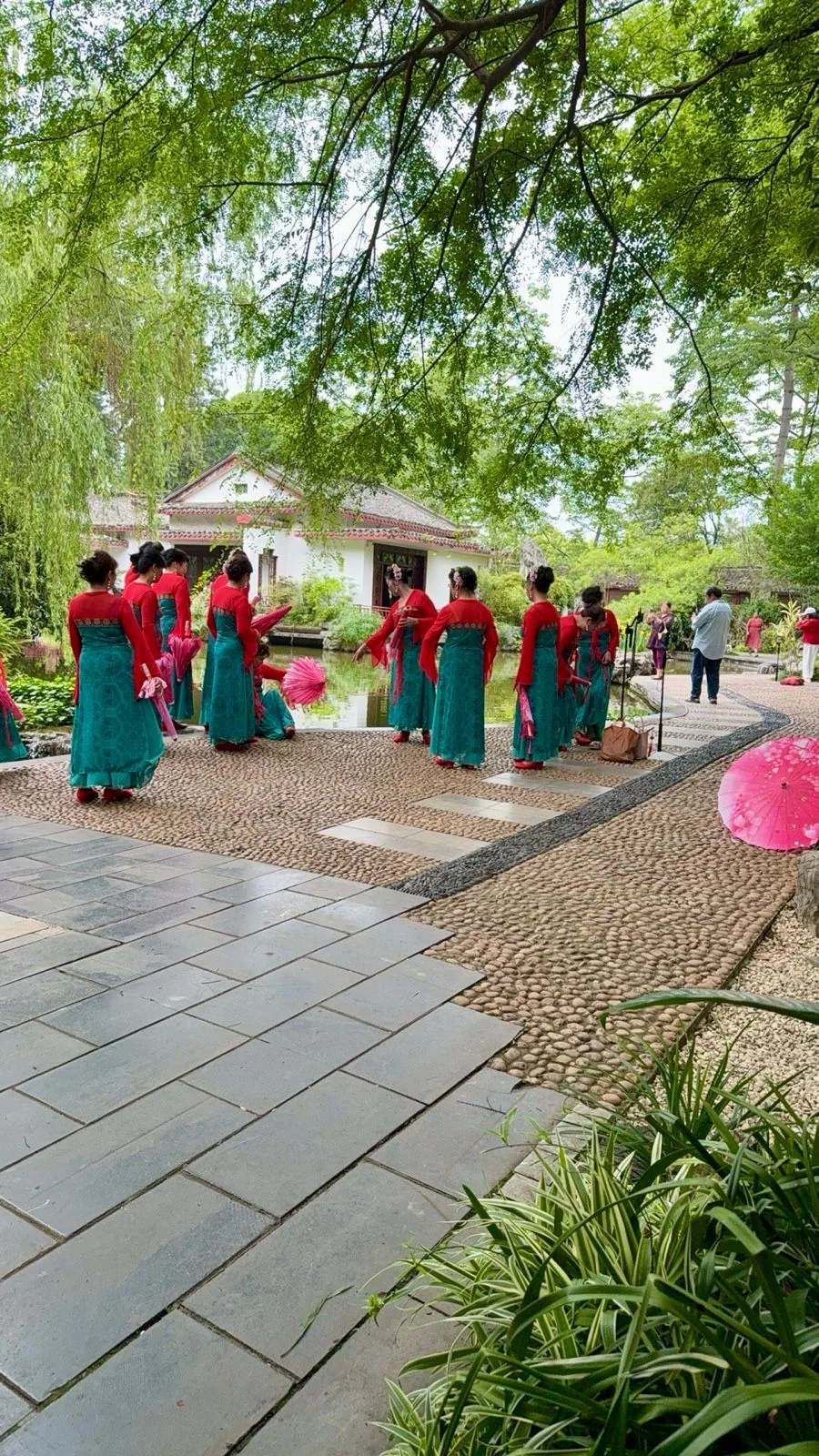
At Liuhou Park (柳侯公园), the park named after Liu Zongyuan, a group in red and green outfits with pink parasols were performing while others took photographs. Trees hung over the path, with a pond alongside.
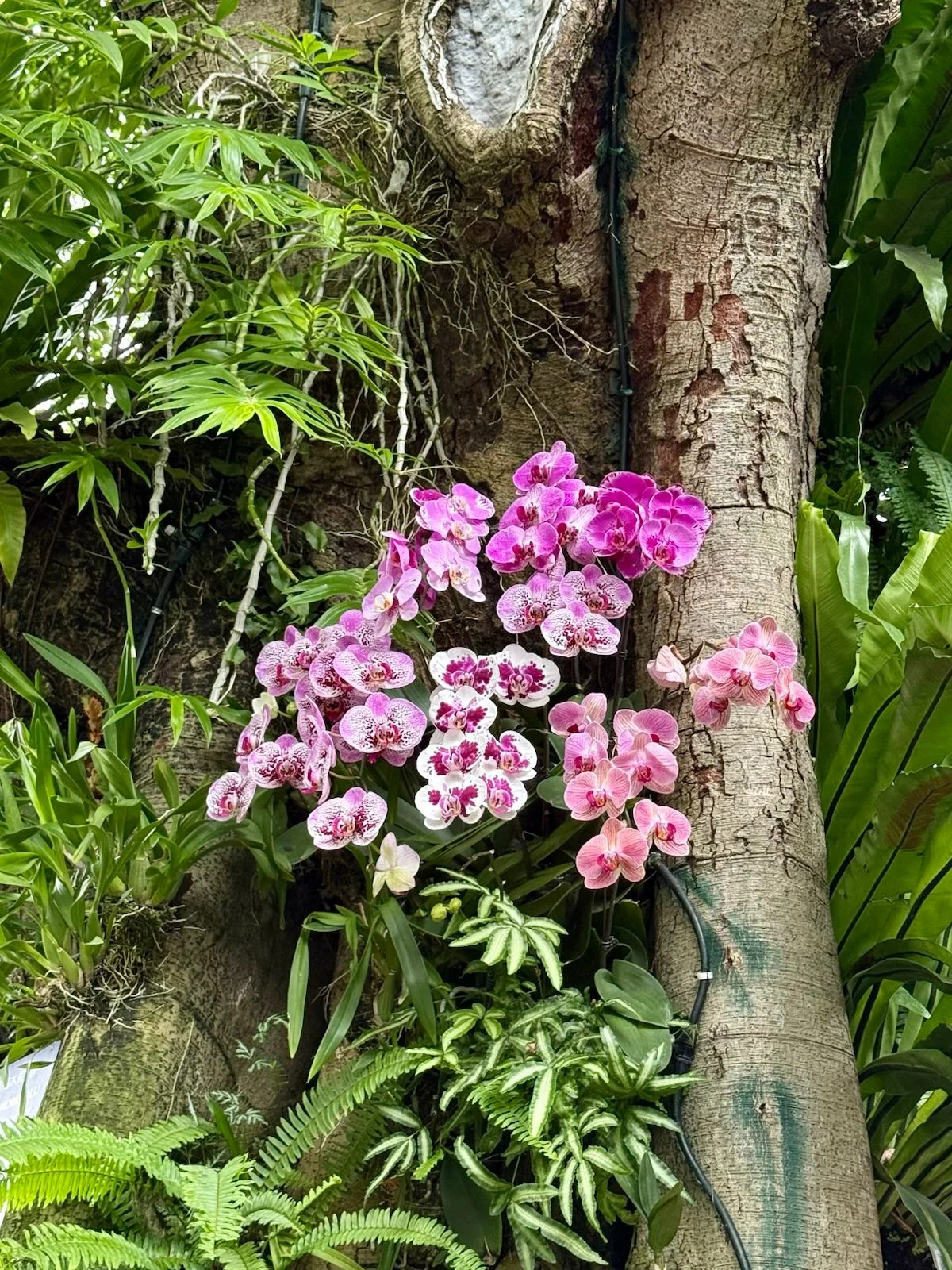
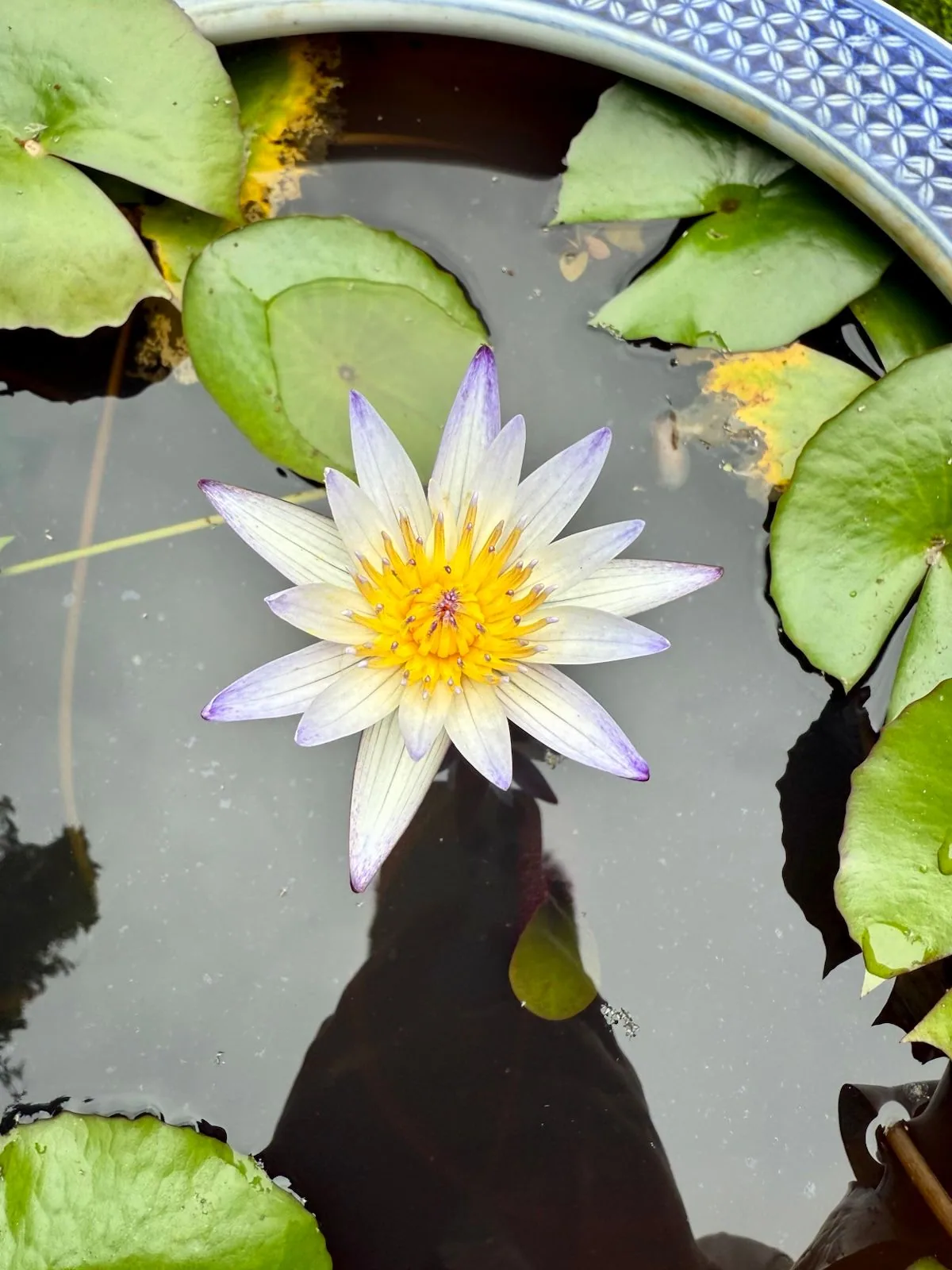
Around the city, I kept stopping for flowers, too: orchids beside a tree, and a flower floating among leaves on the water.
Looking up in Liuzhou Museum
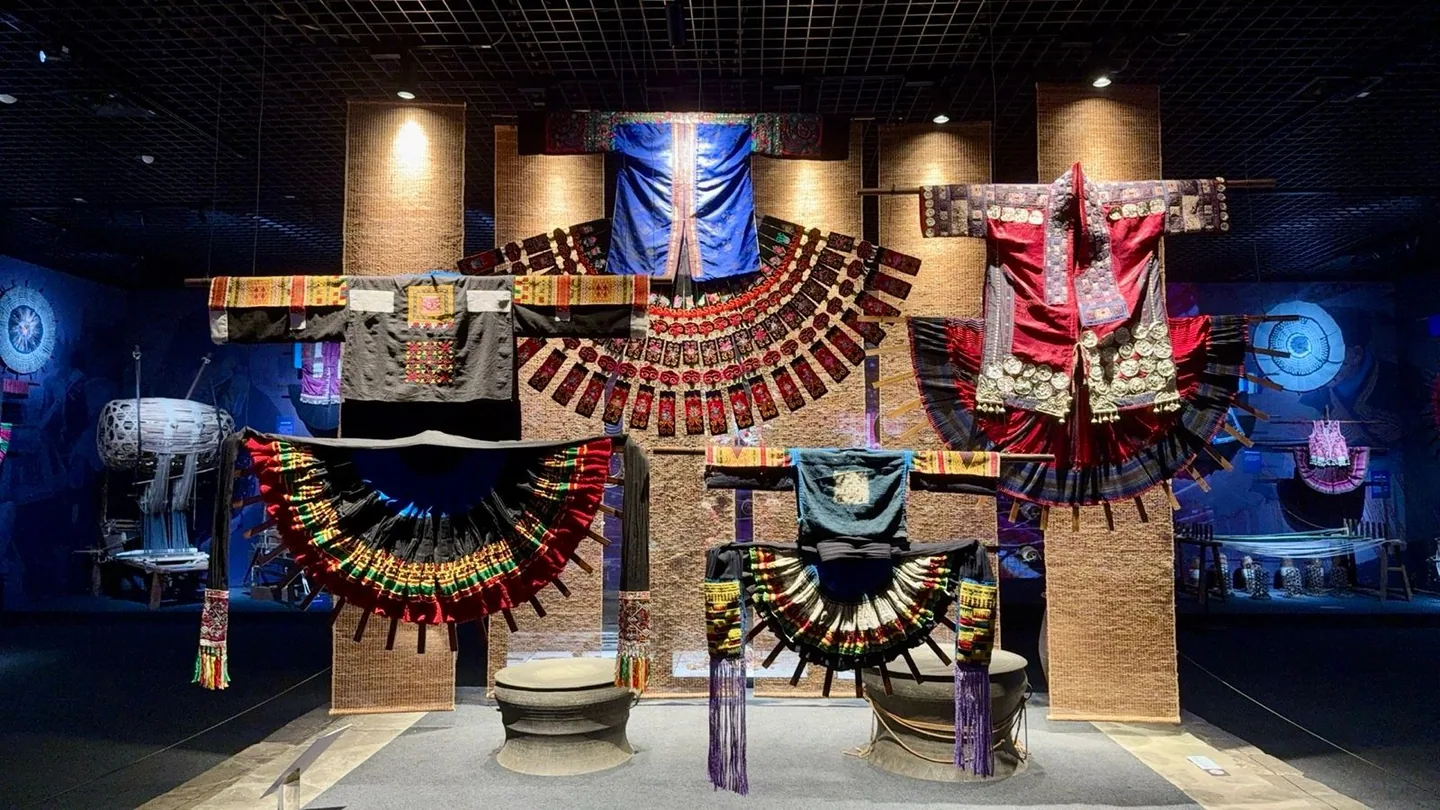
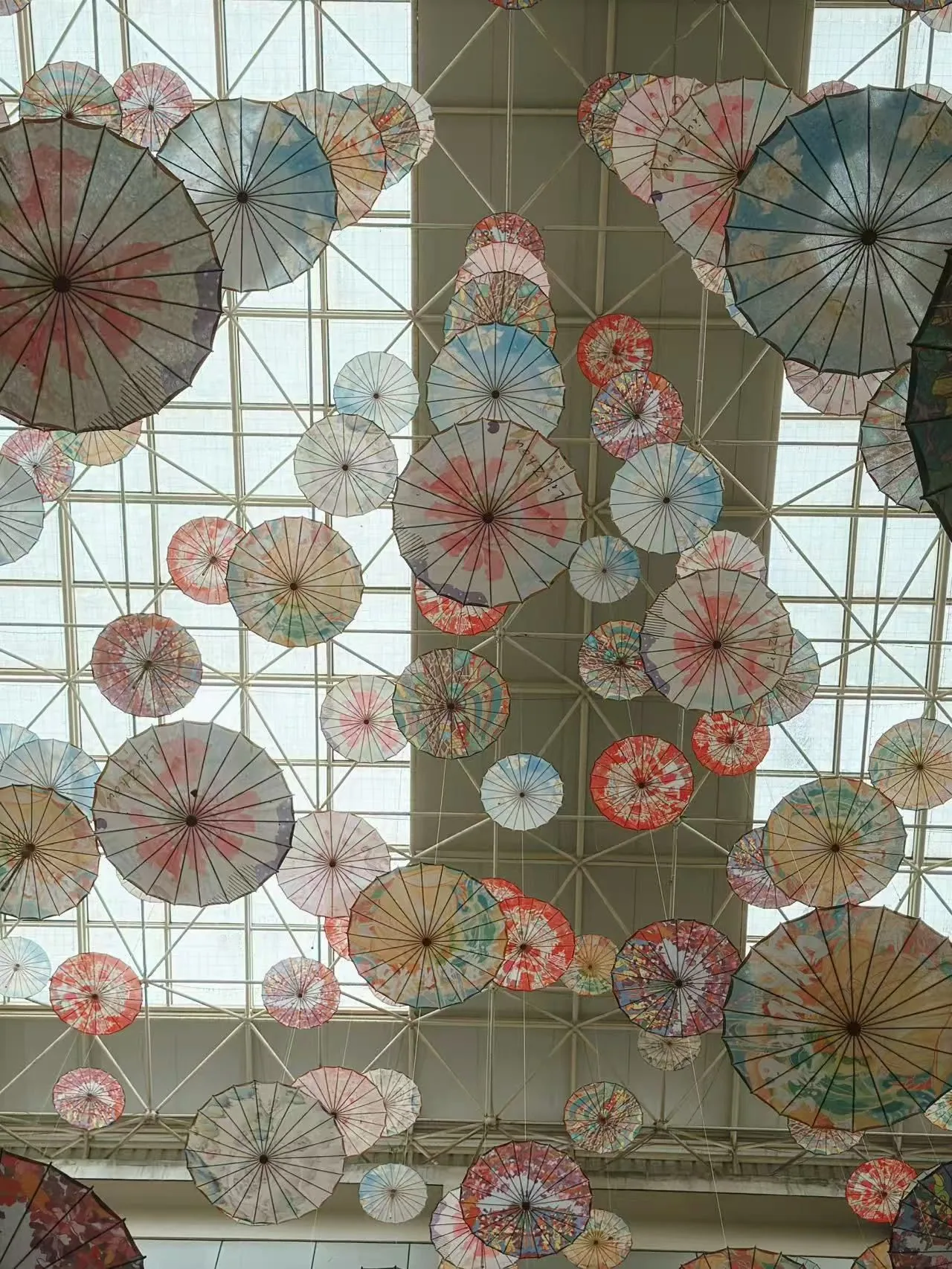
Inside Liuzhou Museum (柳州博物馆), embroidered garments were spread out so you could see their shapes and details. But what made me stop was above my head: paper umbrellas hanging from the ceiling, their coloured patterns overlapping against the light. I thought they were beautiful.
The view from Ma’anshan, and a cat in Yaobu
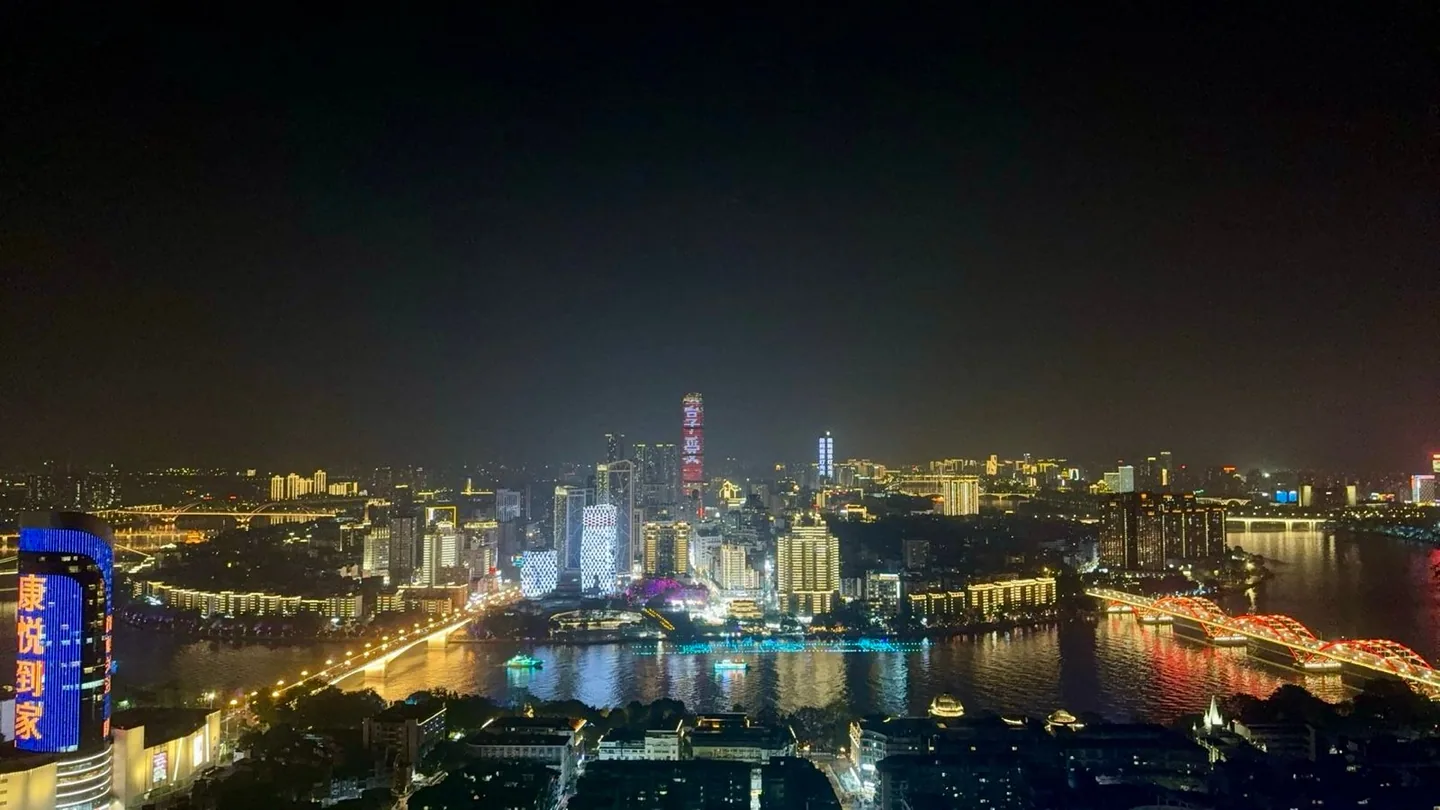
To see the river as a whole, I went up Ma’anshan (马鞍山) at night. From the top, the river curves around the lit buildings and the bridges stand out across the water, a very different city from the one I’d seen standing on a bridge.
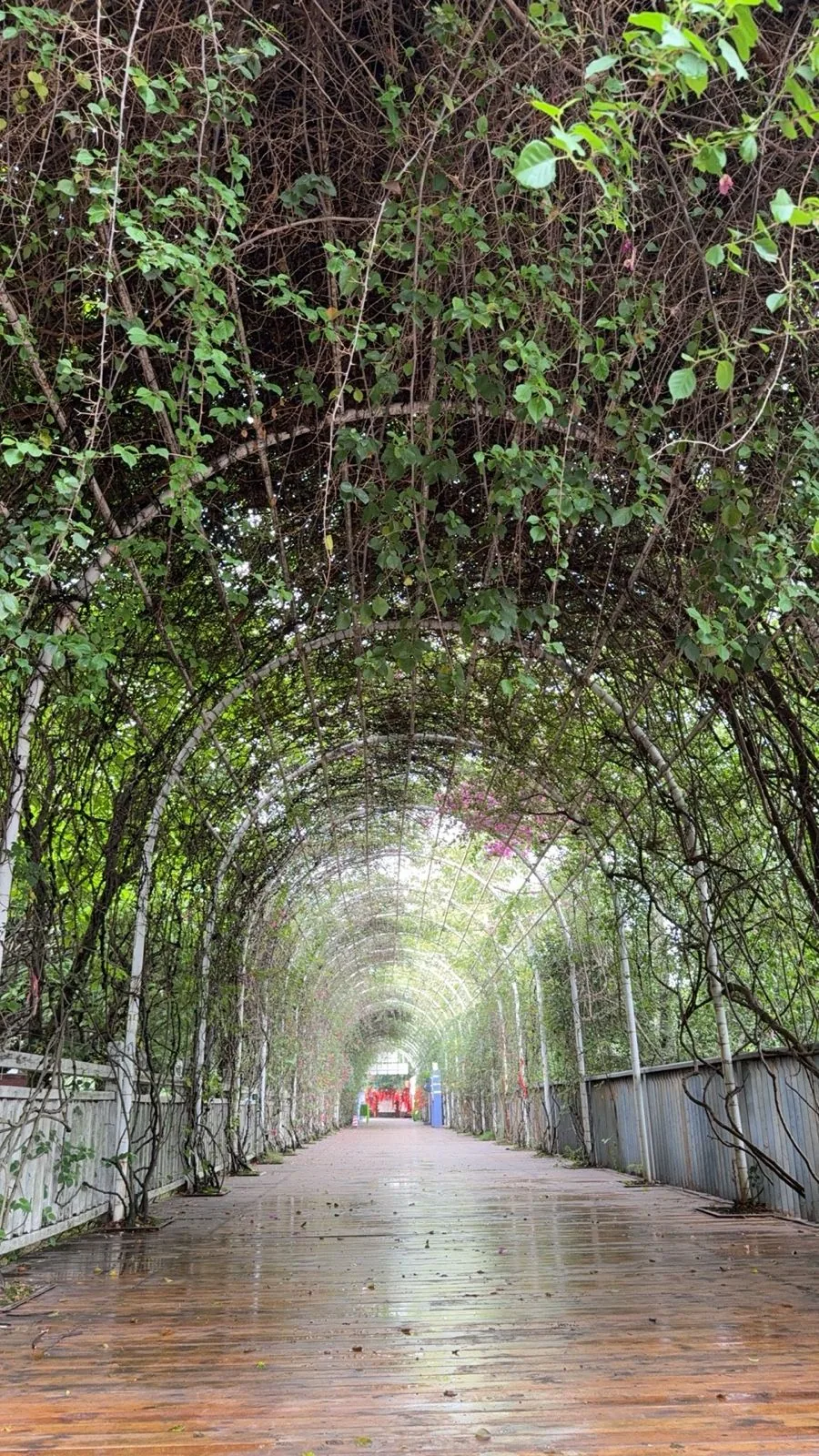
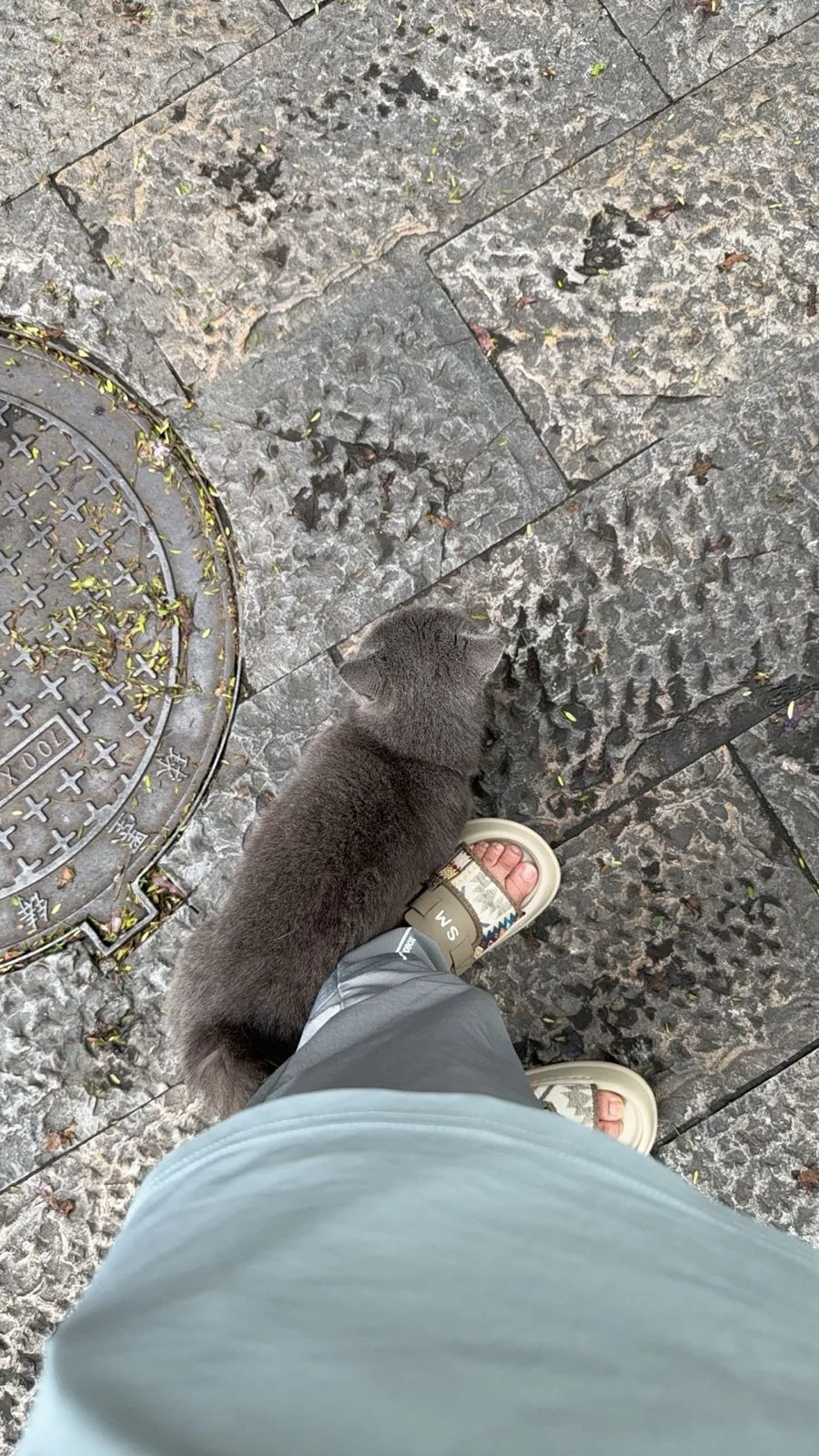
Yaobu Ancient Town (窑埠古镇), by the river, was quieter. I walked through a passage with plants growing over its arches, and a grey cat stopped beside my feet.
From Yaobu, I also filmed the river as a red boat went past.
The night the building shook
My flat was on the 19th floor. At around 12:30 a.m. one night, I felt the first tremor, and the building swayed for what felt like fifteen or twenty seconds. My mind went completely blank.
That earthquake was why I left for Kunming after only ten days. It also meant I never made it to Longtan Park (龙潭公园). It wasn’t especially close to where I was staying, and with work to do, I kept telling myself I’d go later. It’s the one place in Liuzhou I regret missing.
If you go
- Getting around: Use DiDi or local buses. For a longer stay, ask about renting an electric bicycle (电动自行车).
- Save these names: 螺蛳粉 (luosifen), 桂林米粉, 槐花粉, 龟苓膏 — show them when ordering.
- Before you go: Start here covers payments, apps and the rest of the preparation.
- Planning a longer trip? Send me your draft itinerary for a second look.
About this note
This note draws on my own travels and photographs and videos.
- Official introduction to Liuzhou: location and history
- General Motors China: SAIC-GM-Wuling’s base in Liuzhou and its Wuling and Baojun brands