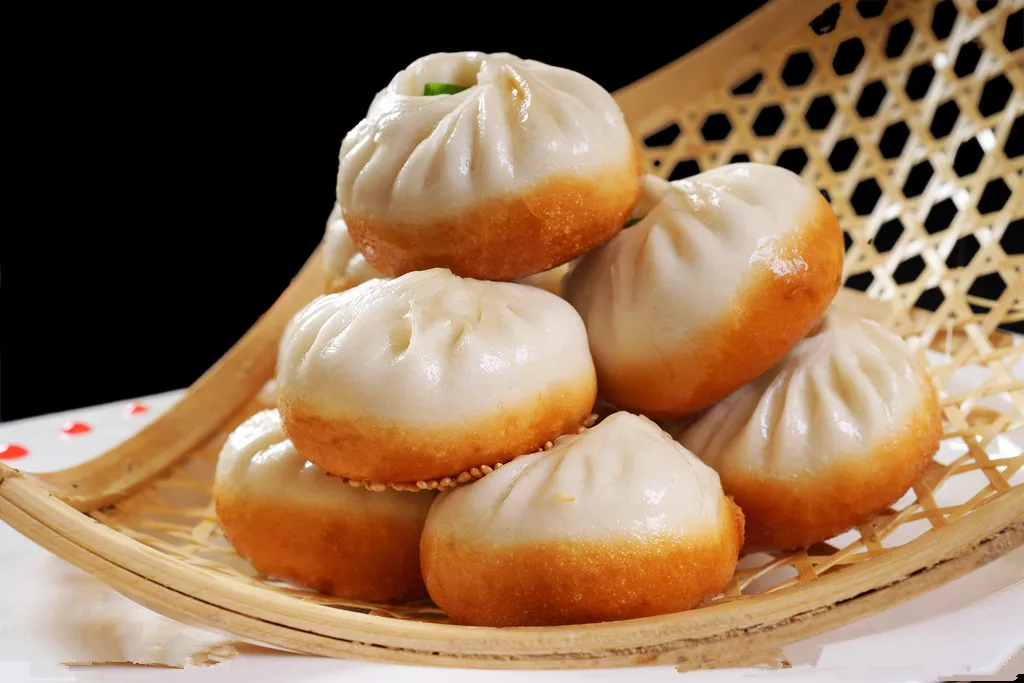
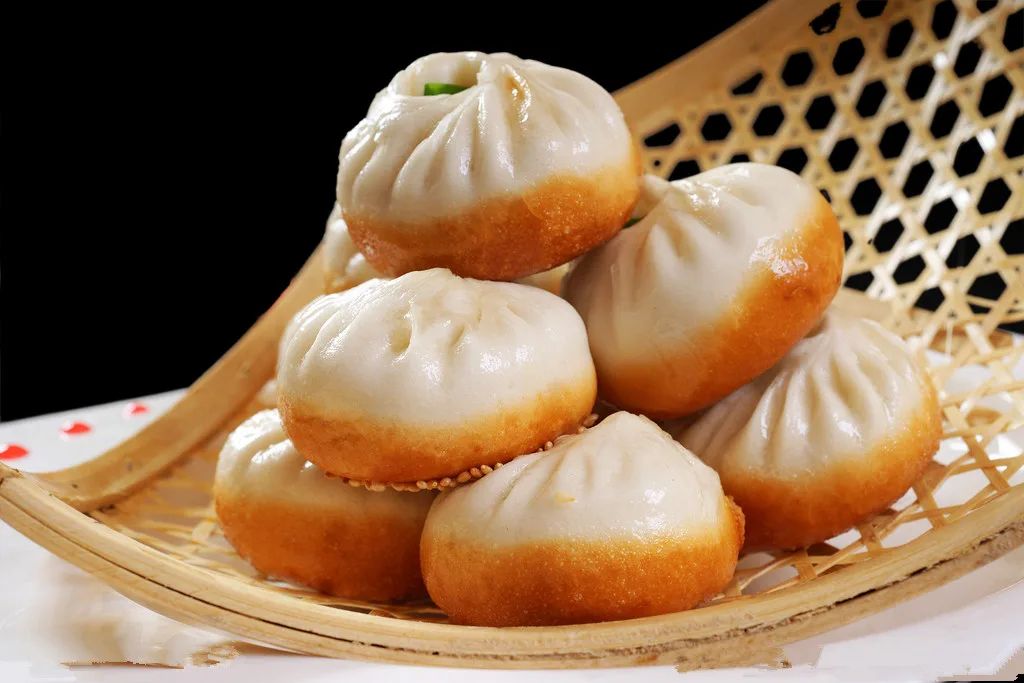
Start with shengjianbao, Shanghai’s pan-fried buns, or xiaolongbao, small steamed dumplings often filled with pork and broth. They’re different dishes, so save the Chinese names if you have a particular one in mind. For a sit-down meal, look for local Shanghai cooking, often called benbangcai (本帮菜).
Need to explain a food allergy or dietary restriction? Make a Chinese dietary needs card to show restaurant staff.
Shengjianbao: pan-fried buns
Shengjianbao (生煎包), also called shengjian (生煎) or shengjian mantou (生煎馒头), have a fried base and a soft upper layer. Pork is a common filling.
Styles vary. Some have plenty of broth inside; others are more bread-like. If you’re trying them for the first time, order a small portion and take care with the hot filling.
The city’s food guide explains that an order called one liang (一两) traditionally means four buns at shengjian shops. Check the number included before ordering rather than assuming every menu uses the same portion size.
Xiaolongbao: steamed dumplings
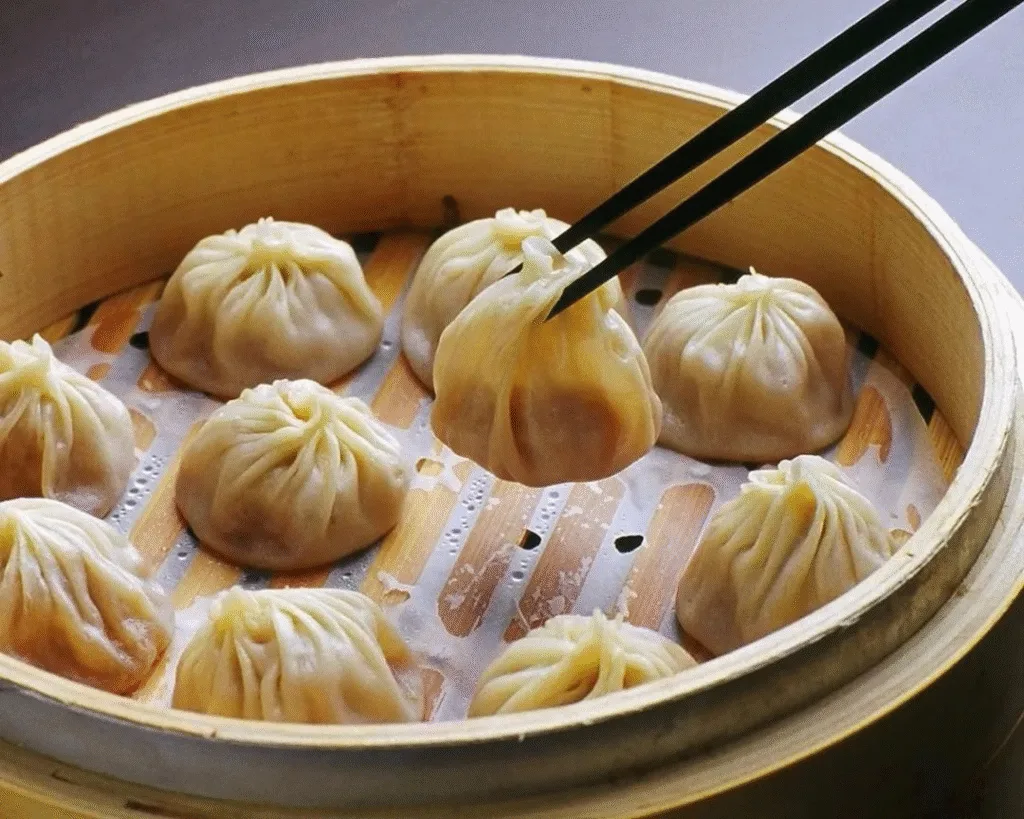
Xiaolongbao (小笼包) are steamed rather than pan-fried. You may also see the name xiaolong mantou (小笼馒头). The city’s guide identifies Nanxiang steamed buns with Shanghai and describes them around Yuyuan Garden and Nanxiang.
Use a spoon if one is provided and let the filling cool before taking a large bite. Check what’s inside the version you’re ordering, especially if a menu offers several fillings.
You don’t need to try both kinds of bun in one meal. One can make a simple first order, with something else added if you’re still hungry.
Local dishes for a sit-down meal
For a meal beyond snacks, compare the menu’s shared dishes and ask about portion sizes. Shanghai’s restaurant guide includes hongshao rou (红烧肉), pork braised in a brown sauce, and xia ren liang mian huang (虾仁两面黄), crisp-fried noodles with a shrimp topping.
Save the names of dishes you’d like to try, then choose according to the current menu and your dietary needs. These are dish suggestions rather than restaurant reviews or a fixed-price set meal.
How much should you order?
Check whether the price is per bun, basket, plate or weight. For one or two people, start with fewer dishes and add more if needed. Ask about extras such as drinks and accompaniments before ordering.
Keep important allergies or dietary requirements written in Chinese. Ask about sauces, fillings and preparation directly: a familiar name or photo may not tell you all the ingredients.
Fit meals around your day
Choose somewhere near the part of Shanghai you’re visiting instead of spending every meal travelling across the city. My Shanghai sights and trip-planning guide covers the Bund, Pudong and other places to visit.
Set up Alipay or WeChat Pay before you go, and bring a backup way to pay.
Sources and updates
Sources checked on 29 Oct 2026.
- Shanghai municipal government: pan-fried pork buns
- Shanghai municipal government: Nanxiang steamed meat buns
- Shanghai municipal government: local restaurant dishes
Check the latest official information for your travel date before making a booking.
Spotted a mistake? Let me know.